What Safety and Quality Documents Should You Request for Commercial Kiddie Rides?
Commercial kiddie ride buyers should verify more than a supplier’s general safety claims. Each product should be matched with model-specific specifications, inspection records, applicable test or compliance documents, packing information, installation guidance and destination-market requirements before the order is finalized.
- 1. Start With the Exact Product Model
- 2. Request Complete Product Specifications
- 3. Ask for Quality Inspection Information
- 4. Distinguish General Compliance Claims From Model-Specific Documents
- Ask Which Document Applies to Which Model
- Confirm Destination-Market Requirements Separately
- 5. Request the Documents Needed for Import and Delivery
- 6. Ask for Installation and Operating Information
- Installation Information
- Operating Manual
- Maintenance Information
- 7. Verify Product Labels and Identification
- 8. Check the Scope and Date of Every Important Document
- 9. Build a Pre-Order Document Checklist
- 10. Confirm Documents Before Finalizing the Quotation
- FAQ
- Is CE enough for my market?
- What documents should be included in a kiddie ride shipment?
- Should every kiddie ride have the same certificate?
- How do I know whether a test report applies to my machine?
- Should I ask for inspection photos or videos?
- When should I request compliance documents?
- Verify the Model, Document and Destination Together
Buying commercial kiddie rides requires more than checking product photos, prices and appearance.
For importers, shopping malls, FEC operators and distributors, the documentation supplied with the equipment can affect customs preparation, installation, maintenance and local compliance review.
A supplier may state that its products follow certain standards, but buyers should still verify which documents apply to the exact model being ordered and whether those documents are relevant to the destination market.
Review the manufacturer's quality control and global delivery process before requesting model-specific documents.
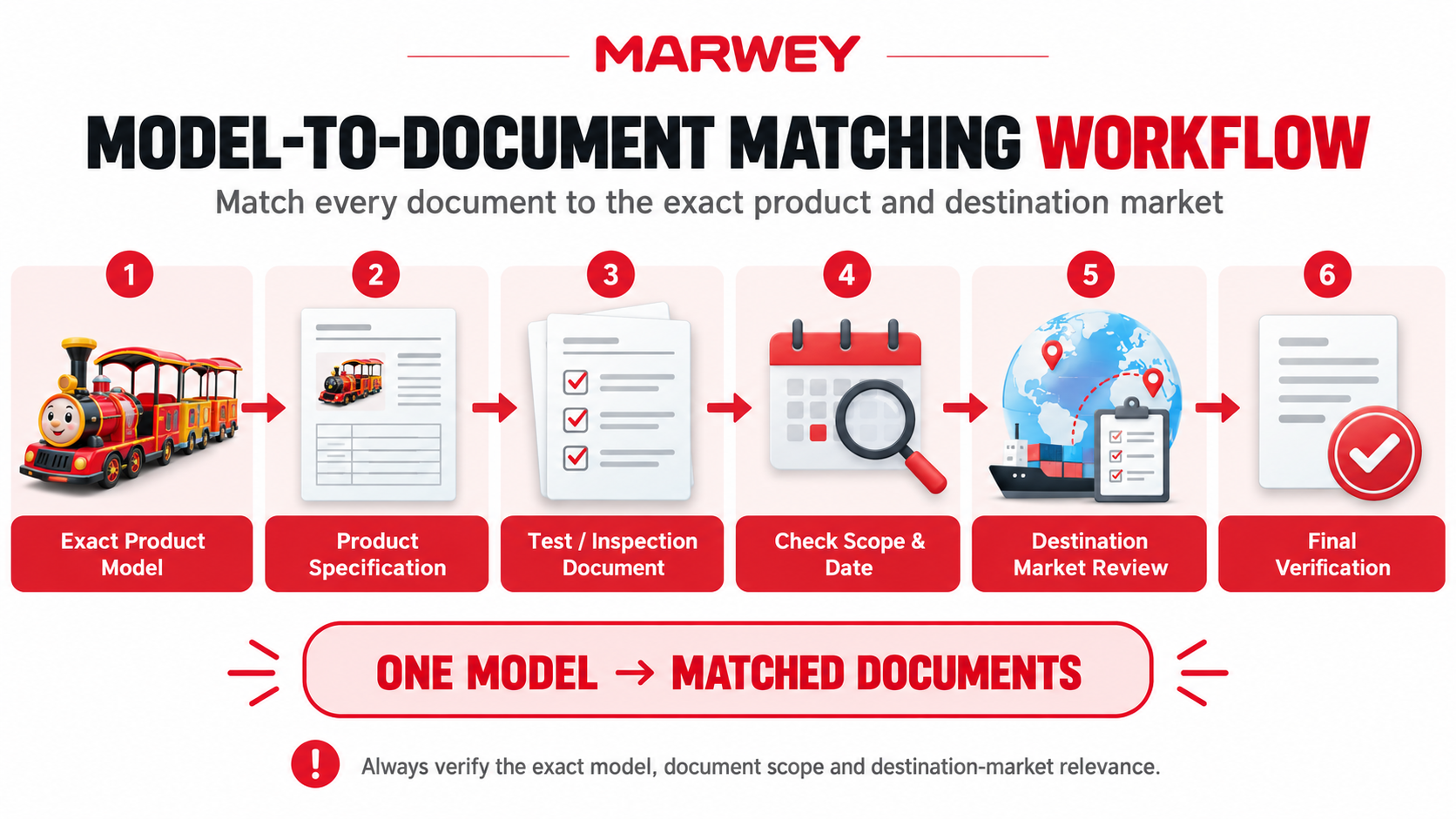
1. Start With the Exact Product Model
The first step is to make sure every document matches the actual ride being purchased.
Use the product catalog to match every document to an exact ride model.
Do not assume that one certificate, test report or specification automatically applies to every product in the supplier's range.
For each model, confirm:
- Product name
- Product model or reference
- Dimensions
- Weight where available
- Power requirements
- Materials or finish where relevant
- Operating limitations
- Intended commercial use
- Packing information
The product information on the quotation, specification sheet and other supplied documents should be consistent.
2. Request Complete Product Specifications
Product specifications provide the basic technical reference for the equipment.
A useful specification package may include:
- Model identification
- Overall dimensions
- Electrical requirements
- Main materials
- Passenger or seating configuration where applicable
- Payment configuration
- Operating functions
- Installation requirements
- Packing dimensions
- Net and gross weight where available
Buyers should confirm these details for the actual model rather than relying on a general brochure.
For coin-operated models, review the dedicated product category and model list before matching documents.
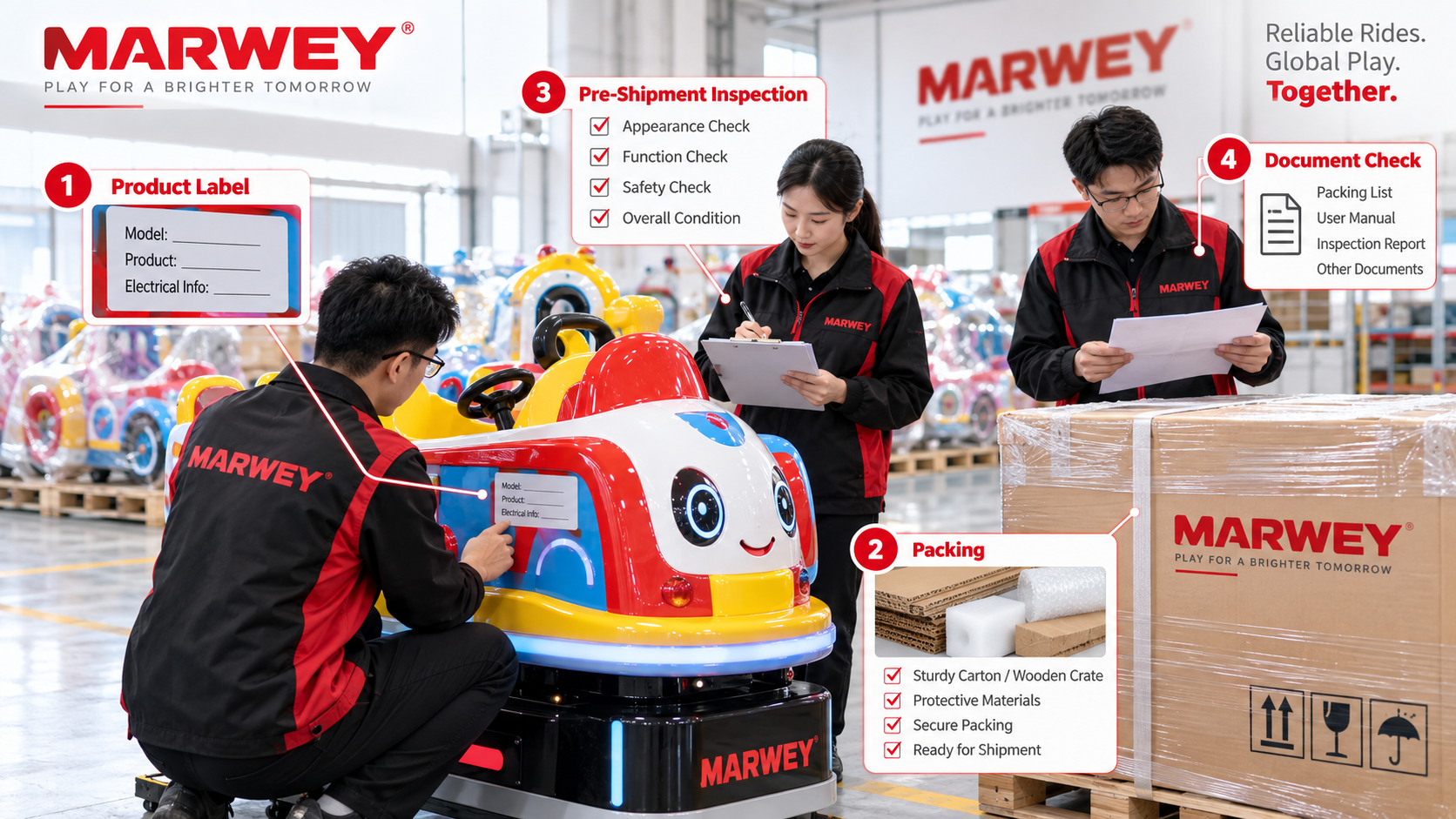
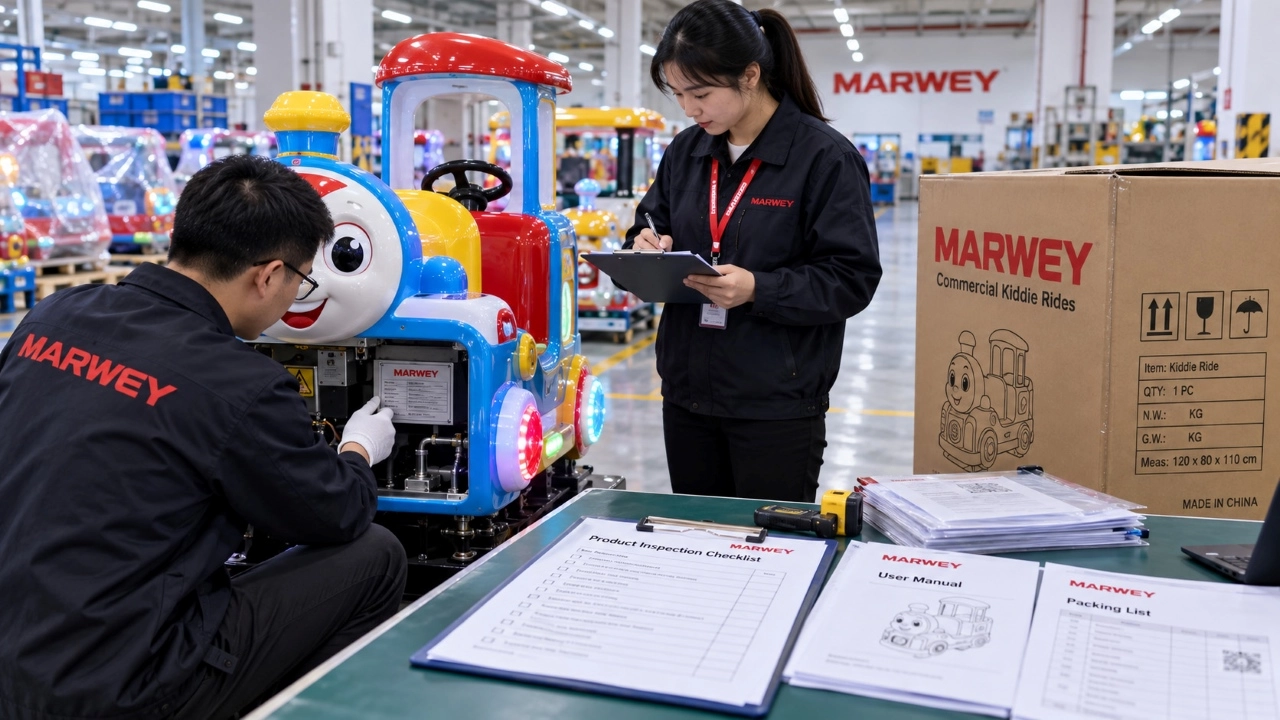
3. Ask for Quality Inspection Information
Quality documentation should show how the actual equipment is checked before shipment.
Depending on the product and supplier process, useful records may include:
- Production inspection records
- Functional test records
- Appearance inspection
- Payment system test where applicable
- Lighting or control checks
- Packing inspection
- Photos or video of the finished equipment
- Pre-shipment inspection records
The goal is not to collect as many documents as possible.
The important point is to confirm that the records correspond to the actual machine being purchased.
4. Distinguish General Compliance Claims From Model-Specific Documents
A general statement that a manufacturer follows international standards is not the same as having verifiable documents for a specific product and destination market.
This distinction is especially important when buyers ask about CE or other market-specific requirements.
Ask Which Document Applies to Which Model
Before relying on a test report, declaration or certificate, check:
- Product model
- Product name
- Date
- Document scope
- Issuing or testing organization
- Applicable standard or requirement
- Whether the document covers the exact configuration being ordered
If the equipment has been customized, ask whether the supplied document still applies to the modified configuration.
Confirm Destination-Market Requirements Separately
Import and compliance requirements vary by country and sometimes by project type.
Buyers should confirm local requirements with the appropriate customs, compliance or regulatory adviser rather than assuming that one document is accepted everywhere.
A CE-related document, for example, should not be treated as a universal guarantee for every model or every destination.
5. Request the Documents Needed for Import and Delivery
Product safety and quality documents are only part of the shipment file.
Import buyers may also need commercial and logistics documents.
Depending on the transaction, these can include:
- Commercial invoice
- Packing list
- Product specifications
- Packing information
- Shipping marks
- Installation documents
- Spare-parts list
- Operating manual
- Other shipment documents required for the destination
The exact document set should be confirmed with the supplier and freight forwarder for the specific shipment.
6. Ask for Installation and Operating Information
A commercial ride should arrive with enough information for the buyer to understand how it should be installed and operated.
Useful documents can include:
Installation Information
Confirm:
- Installation steps
- Required tools where applicable
- Product positioning
- Connections
- Assembly requirements
- Model-specific precautions
Operating Manual
The manual should correspond to the actual product and configuration.
It may include:
- Start-up procedure
- Normal operation
- Payment operation where applicable
- Controls
- Basic troubleshooting
- Shutdown procedure
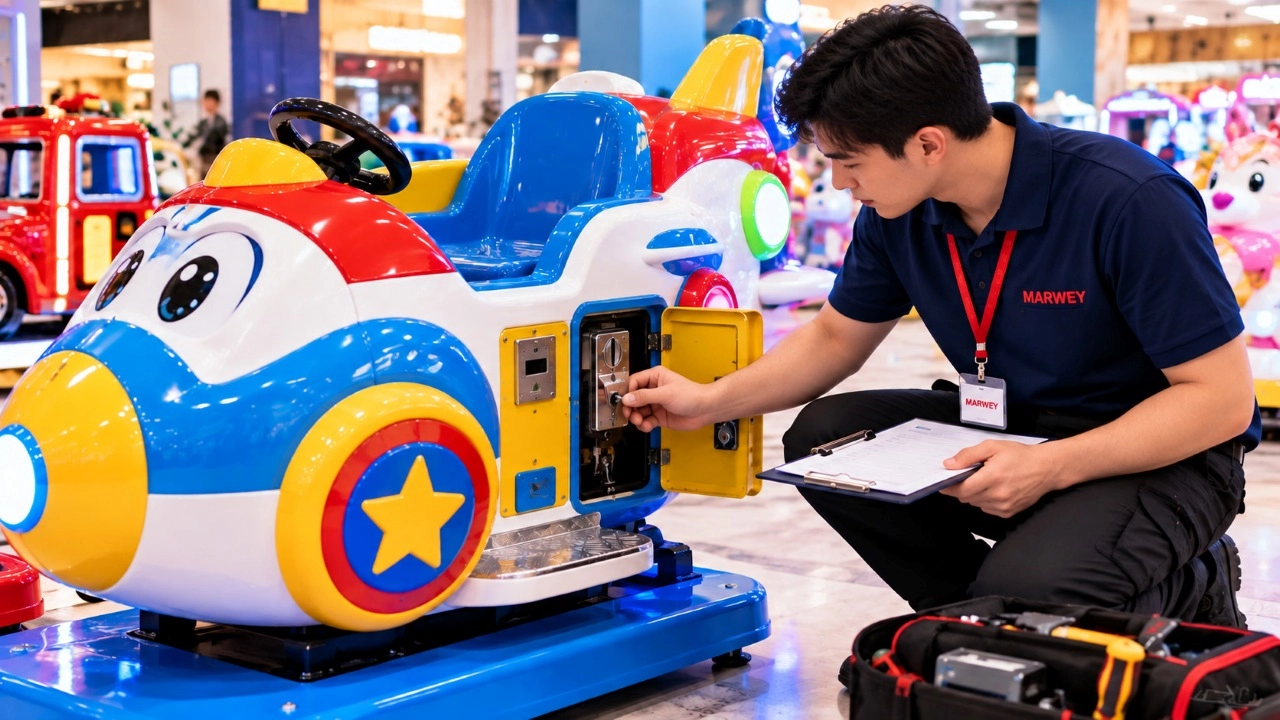
Maintenance Information
Ask for:
- Routine inspection guidance
- Cleaning recommendations
- Wear-part information where available
- Spare-parts references
- Technical support procedure
These documents are especially useful for distributors and venues that will operate multiple machines.
7. Verify Product Labels and Identification
Product identification should be checked together with the documentation.
Depending on the actual equipment, the buyer may need to verify:
- Model name or number
- Product identification
- Electrical information
- Manufacturer information
- Other required labeling
Do not assume that every destination requires the same label content.
Compare the physical product label with the quotation, specification sheet and applicable documentation.
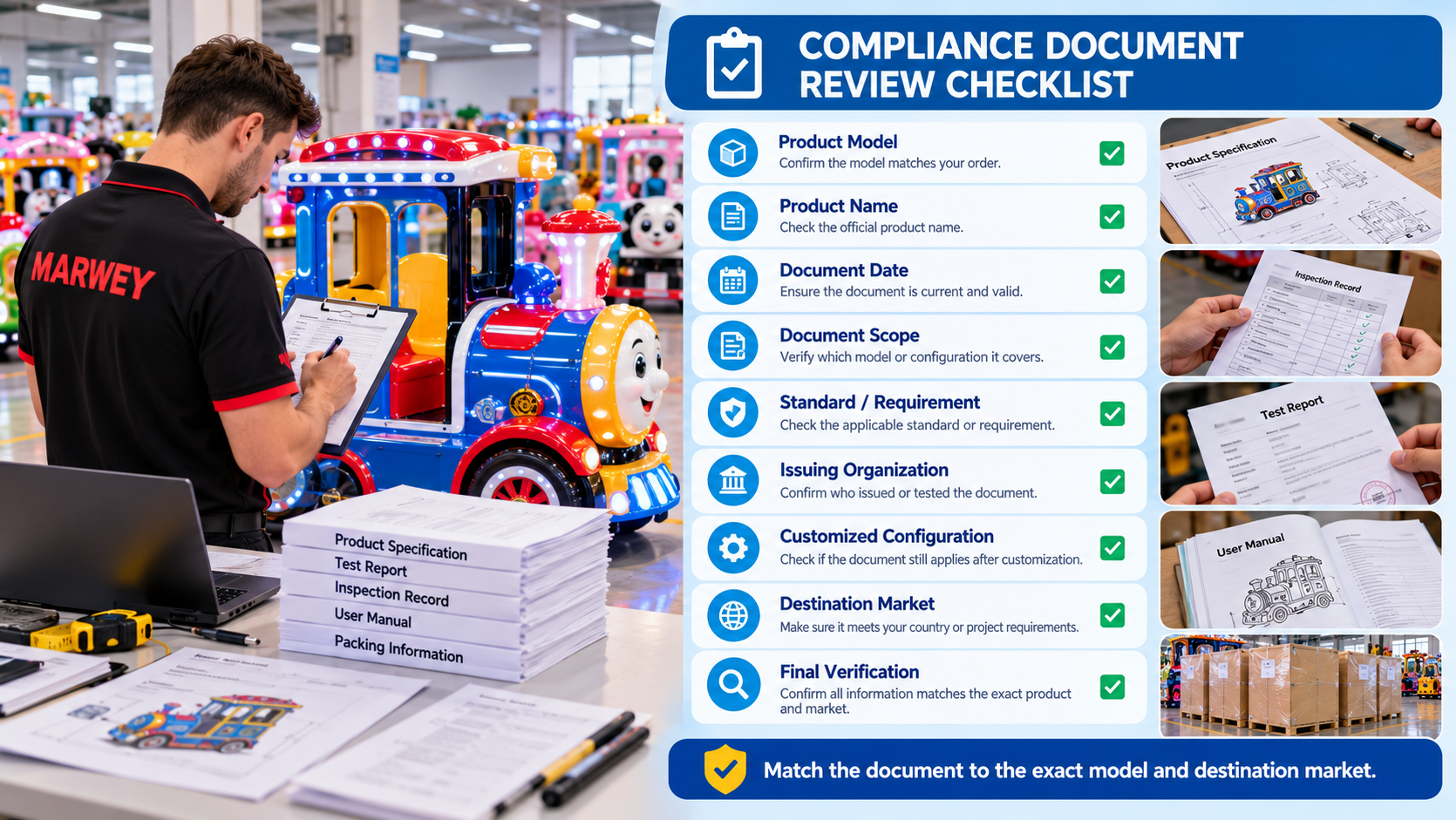
8. Check the Scope and Date of Every Important Document
A document can look professional and still be irrelevant to the equipment being purchased.
Before accepting important technical or compliance documents, review:
| Verification Item | What to Check |
|---|---|
| Product Model | Does it match the ordered ride? |
| Product Name | Is the product clearly identified? |
| Document Date | Is the document current and relevant to the project? |
| Scope | What product or configuration does it cover? |
| Standard / Requirement | What exactly is being referenced? |
| Issuing Organization | Who issued or tested the document? |
| Customization | Does the document still apply after changes? |
| Destination Market | Is it relevant to the buyer's country or project? |
This review helps prevent a document from being matched to the wrong product.
9. Build a Pre-Order Document Checklist
Before confirming an order, buyers can organize the required information into one checklist.
| Document Category | Suggested Items to Request |
|---|---|
| Product Information | Model, dimensions, weight, power, materials |
| Quality Control | Inspection and functional test records |
| Compliance | Applicable test reports, declarations or certificates |
| Product Identification | Labels and model information |
| Shipment | Invoice, packing list, packing details |
| Installation | Installation instructions |
| Operation | Operating manual |
| Maintenance | Maintenance guidance and spare-parts information |
| After-Sales | Warranty terms and technical support process |
Not every product or market will require the same document set.
The final list should be adjusted to the selected model, destination country and project conditions.
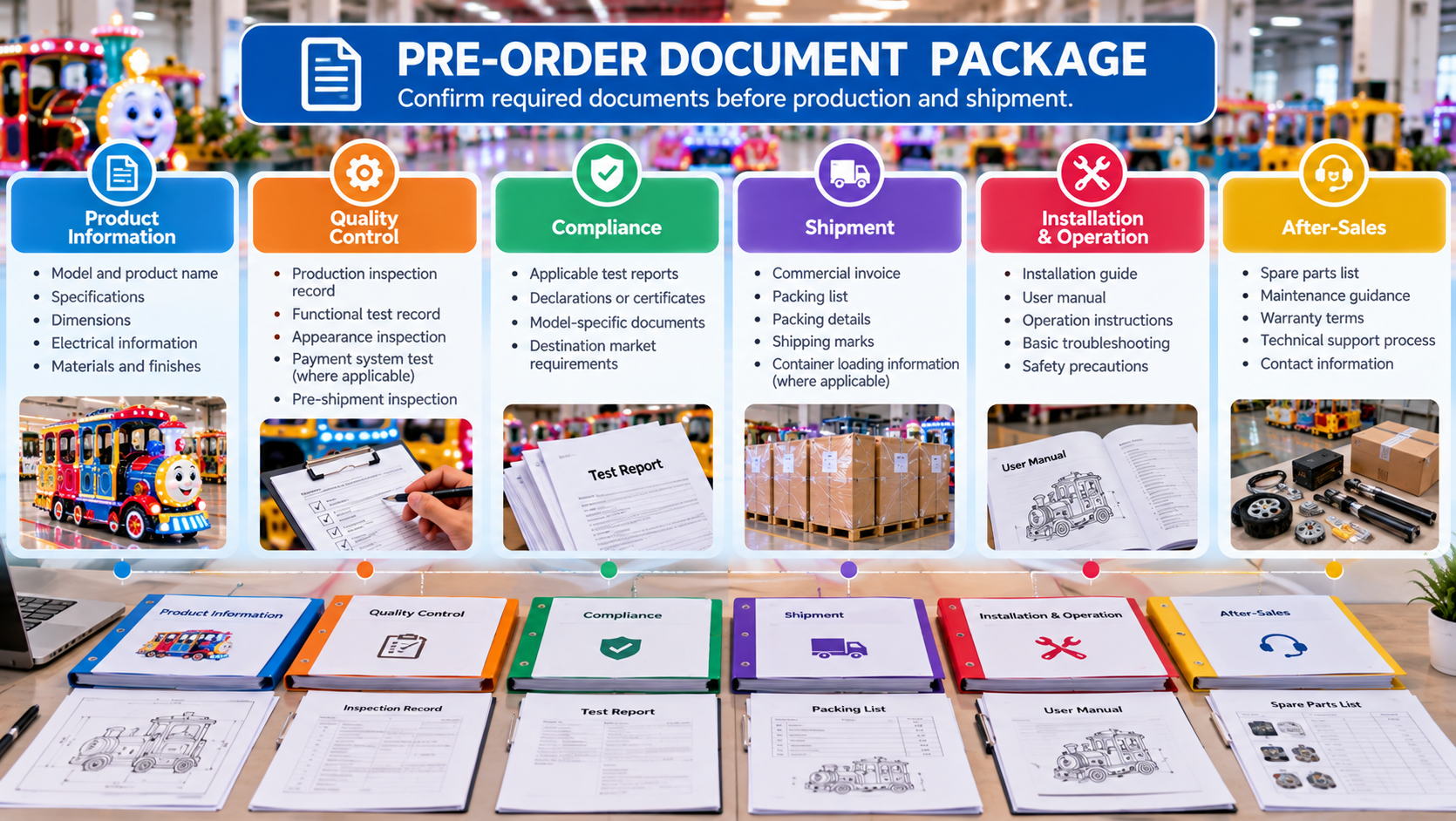
10. Confirm Documents Before Finalizing the Quotation
Document verification should happen before the order reaches the shipment stage.
If a project requires specific test reports, labels, manuals or destination-market documentation, clarify this before production begins.
Useful information to send the supplier includes:
- Destination country
- Selected model
- Quantity
- Venue type
- Required customization
- Required documents
- Local compliance questions
Ask for model-specific documents before confirming your quotation.
FAQ
Is CE enough for my market?
Not necessarily.
A CE-related document should be checked against the exact product model and configuration, and the buyer should separately confirm whether it satisfies the requirements of the destination market.
What documents should be included in a kiddie ride shipment?
The required document set can vary, but buyers commonly review the commercial invoice, packing list, product information, packing details, operating or installation information and any model-specific documents required for the destination.
Should every kiddie ride have the same certificate?
No.
Different models, configurations and markets may require different documentation. Always match the document to the actual product being purchased.
How do I know whether a test report applies to my machine?
Check the product model, product description, document scope, date and issuing organization.
If the equipment has been customized, confirm whether the document still applies to that configuration.
Should I ask for inspection photos or videos?
They can be useful as part of the pre-shipment review, especially when they show the actual equipment being prepared for the order.
They should support, not replace, the required written documentation.
When should I request compliance documents?
Ideally before the order is finalized.
If documents are important for import, installation or local approval, confirm the requirements before production and shipment.
Verify the Model, Document and Destination Together
The safest way to review commercial kiddie ride documentation is to connect three things:
the exact product model, the actual document and the destination-market requirement.
Do not rely only on general safety statements or assume that one certificate applies to every machine.
A complete purchasing review should combine product specifications, quality inspection, applicable compliance documents, packing and shipment records, installation information and local verification before the equipment is ordered.
What Safety and Quality Documents Should You Request for Commercial Kiddie Rides?
Kiddie Ride Maintenance Checklist for Daily Commercial Operation

How to Plan a Kiddie Ride Area for a Supermarket, Hotel or Family Restaurant
Best Kiddie Rides for Indoor Playgrounds and Family Entertainment Centers
FAQ
Do you provide installation and after-sales support?
Yes, we provide installation guides, videos, and online technical support. We also offer a 12-month warranty and spare parts supply.
How profitable are kiddie rides for business? 🔥
Kiddie rides are a highly profitable investment for shopping malls and amusement centers. With low maintenance costs and high demand, many clients can achieve a fast return on investment.
What is the minimum order quantity (MOQ)?
We offer flexible MOQ. For standard kiddie rides, 1 unit is acceptable. For OEM or customized orders, MOQ may vary depending on the design.
Do you support OEM & ODM for custom kiddie rides? 🔥
Yes, we are a professional OEM & ODM kiddie rides manufacturer. We support custom design, branding, colors, and themes to help you stand out in your market.
What is the price of kiddie rides?
The price of kiddie rides depends on the model, size, and customization requirements. Our coin operated kiddie rides are competitively priced for global markets. Contact us to get the latest price list and quotation.
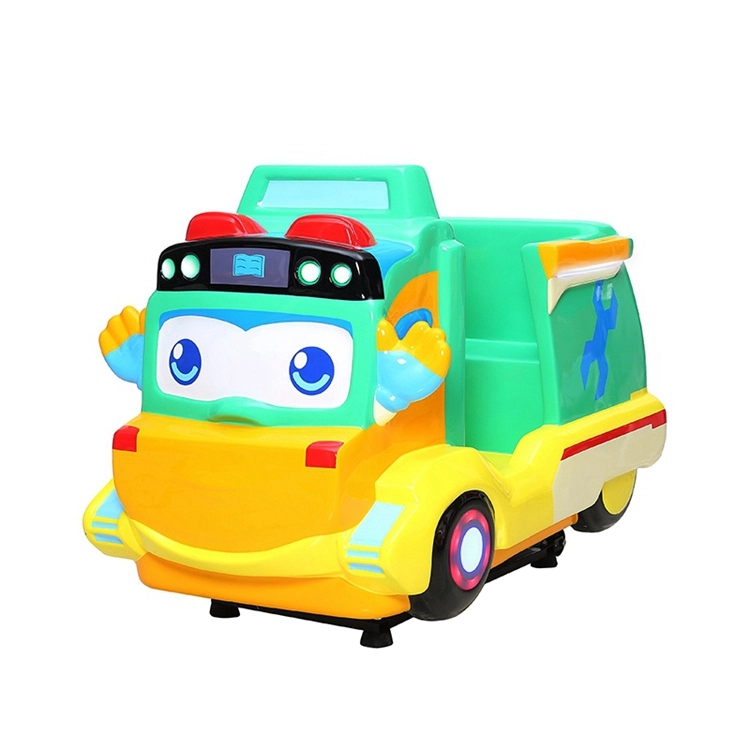
Kids Electric Swing Ride Commercial Amusement Game Machine
These durable electric swing rides are ideal for amusement parks and family entertainment centers. Safe, simple to operate and long-lasting, they are great commercial amusement equipment for sale.
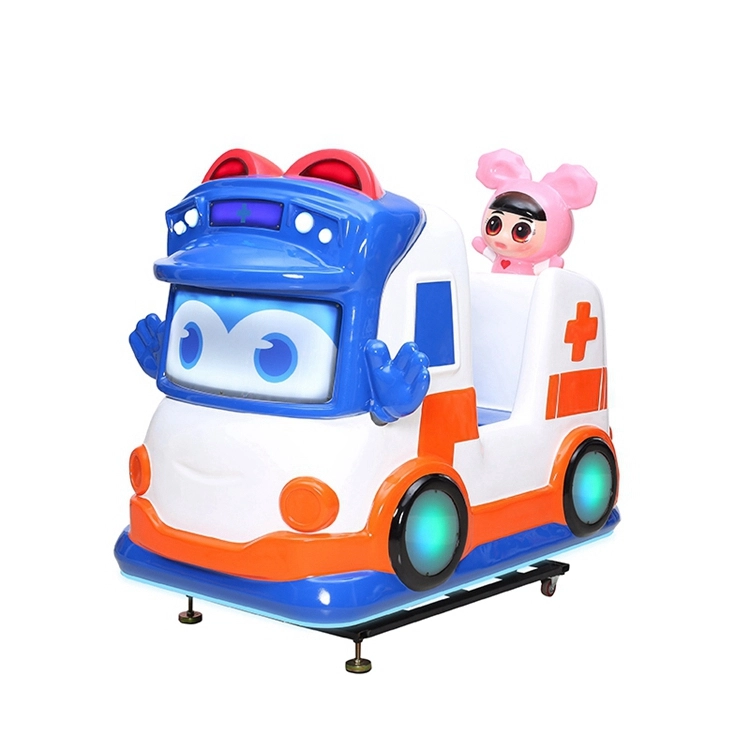
Indoor Supermarket Coin Operated Kids Amusement Ride Machine
These durable coin-operated indoor amusement machines fit supermarkets and family venues perfectly. They integrate video content and fun movements to delight kids and effectively draw more visitors.
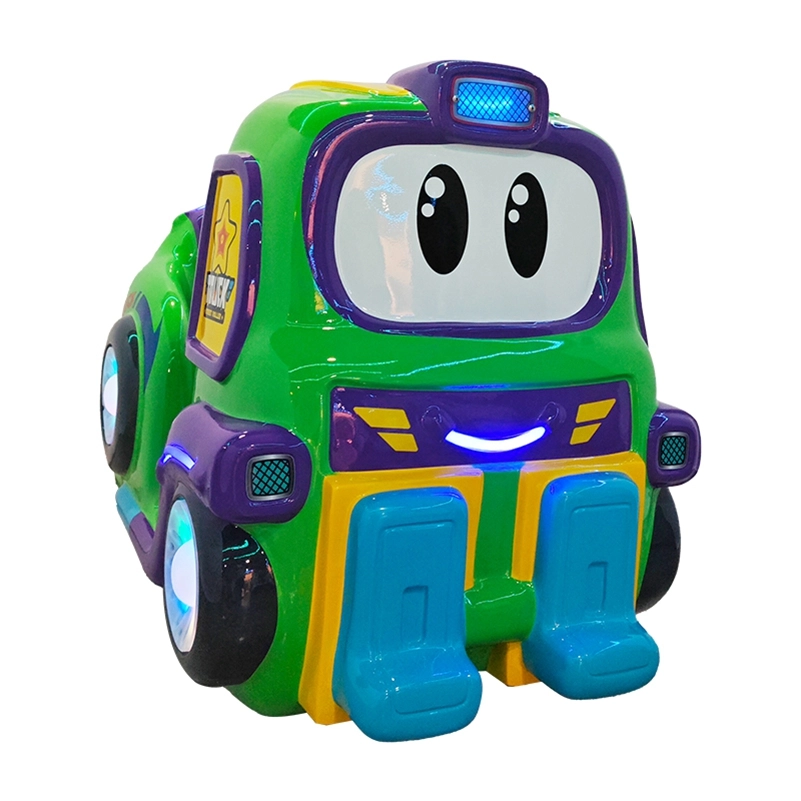
Children Coin Operated Swing Car Engineering Team MP5 Arcade Equipment
This coin-operated electric MP5 swing car is suitable for amusement parks and kids' play areas. Well-crafted and easy to use, it provides safe and enjoyable rides for young children.
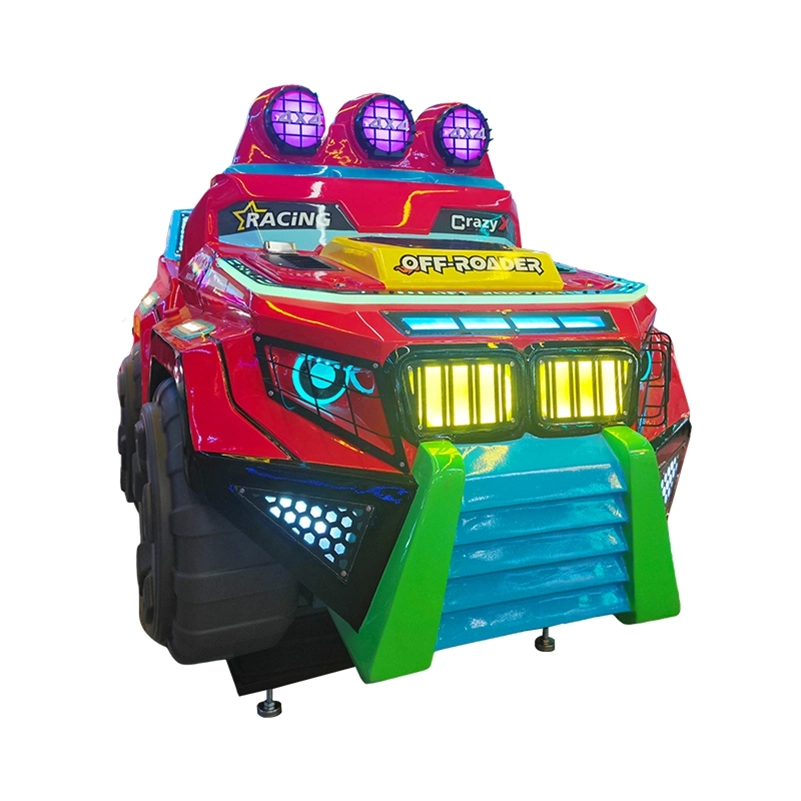
New Design Coin Operated Swing Machine Indoor Commercial Kiddie Ride
This newly designed coin-operated kiddie swing machine is built for indoor commercial use. It is easy to install and runs reliably, providing safe and entertaining fun for children in arcades and amusement parks.
Leave a message
Contact us

info@marwey.com

+86 189 2218 4260

101, Bldg. A, No. 501, Shixin Road, Dalong Street, Guangzhou, Guangdong, China
Quick Links
Kiddie Ride
Marwey Amusement
marwey_arcade
Marwey
Arcade Marwey
Whatsapp: +8618922184260