Kiddie Ride Maintenance Checklist for Daily Commercial Operation
Kiddie ride maintenance should not begin only after equipment fails. Commercial operators should build routine inspection, cleaning, operating observation and maintenance records into daily venue management, while following the product manual and applicable local requirements.
- 1. Start With a Pre-Opening Daily Check
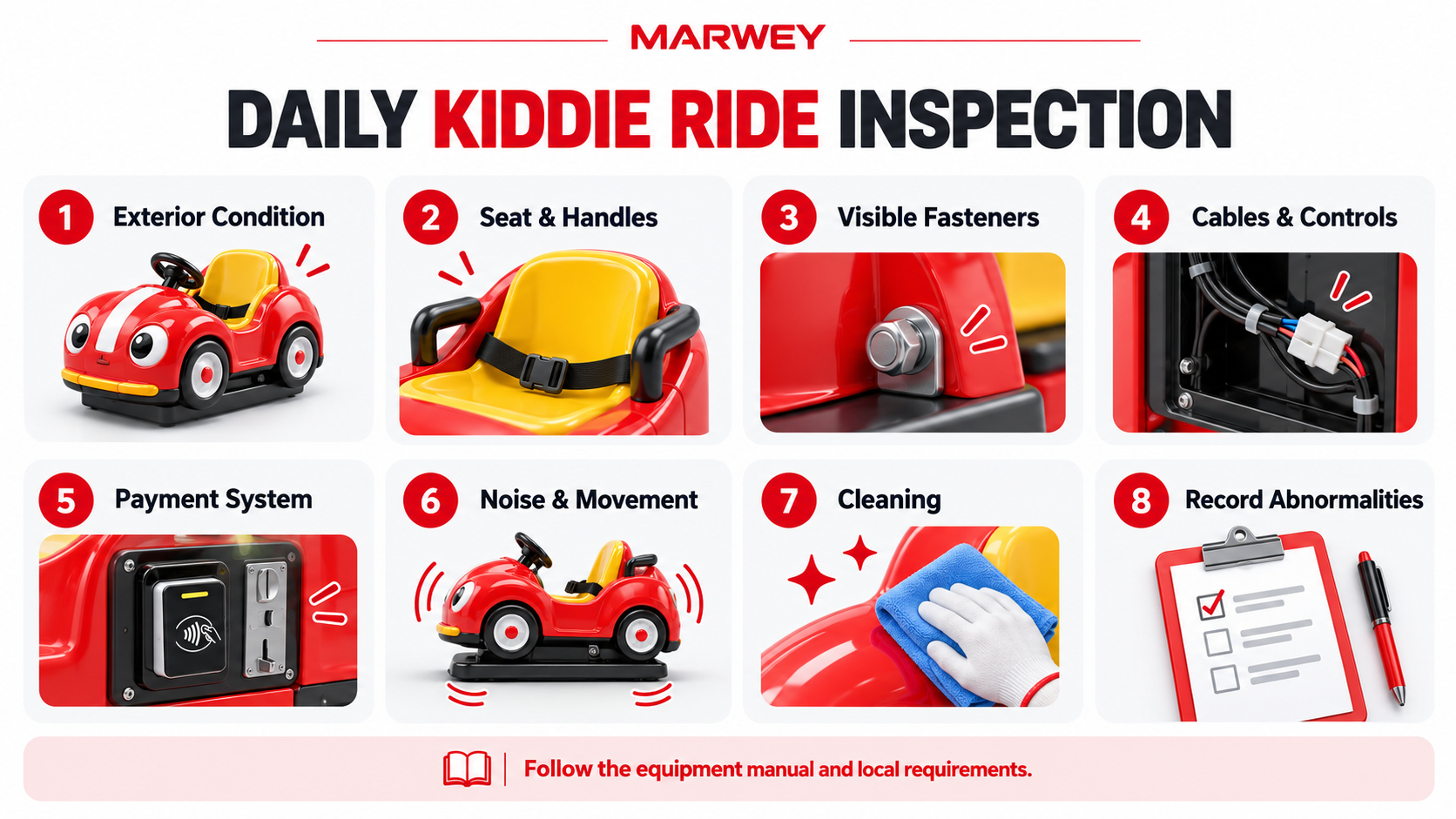
- Exterior Condition
- Seats and Passenger Areas
- Fasteners and Visible Structure
- Cables and Connections
- Control Functions
- 2. Include the Payment System in the Operating Check
- 3. Observe the Ride During Operation
- Unusual Noise
- Unusual Movement
- Temperature or Smell
- Payment Problems
- Customer Feedback
- 4. Clean the Ride After Operation
- 5. Keep Daily, Weekly and Monthly Maintenance Records
- 6. Track Repeated Problems Instead of Resetting and Forgetting
- 7. Prepare Spare Parts Before They Are Needed
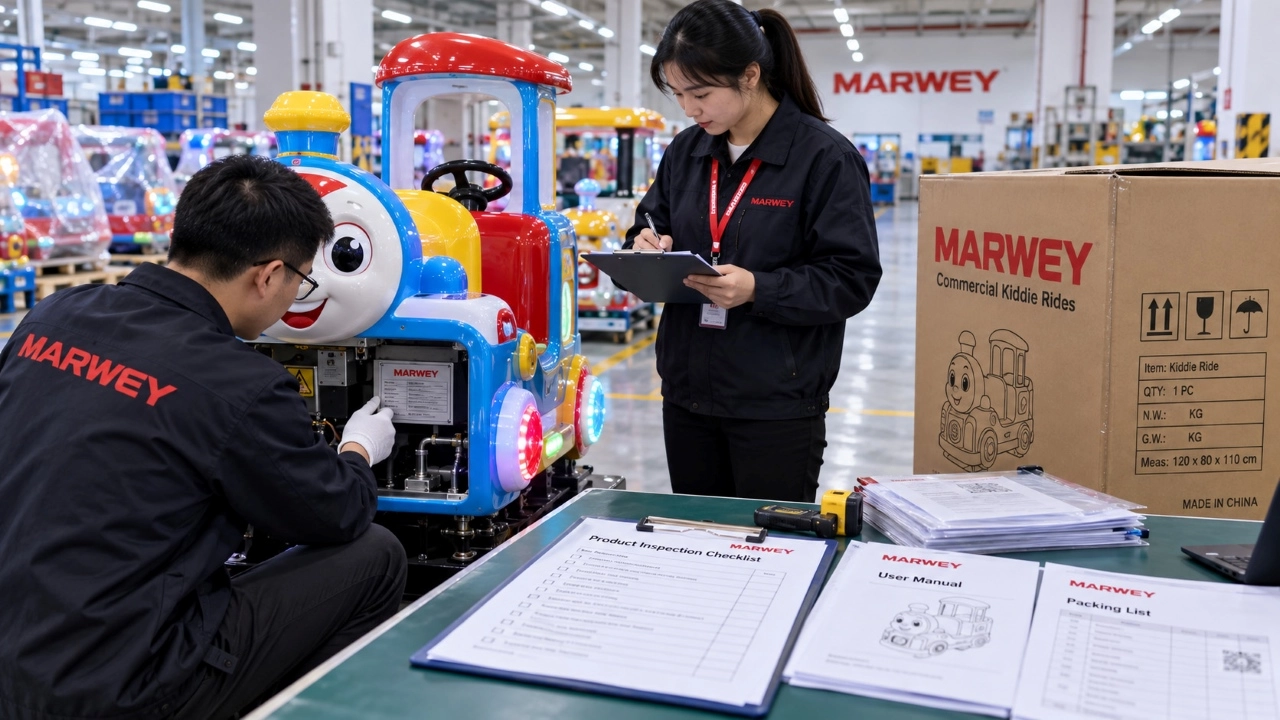
- 8. Request Maintenance Documents During Purchasing
- 9. Build a Clear Fault Reporting Process
- 10. Use a Simple Daily Inspection Checklist
- FAQ
- How often should a kiddie ride be inspected?
- What spare parts should a venue keep?
- Should the payment mechanism be checked every day?
- What should staff do if a ride makes an unusual noise?
- What information should I send to the supplier when reporting a problem?
- Maintenance Is Part of Daily Operation
Commercial kiddie ride maintenance should not begin only after a machine stops working.
For arcades, FECs, shopping malls and other commercial venues, routine inspection and cleaning can help operators identify visible problems, abnormal operation and maintenance needs before they become more disruptive to daily business.
The exact inspection frequency and maintenance procedure should always follow the equipment manual, supplier instructions and applicable local requirements.
Choose equipment from a supplier that explains operation, inspection and lifecycle support.
1. Start With a Pre-Opening Daily Check
Before opening the venue, staff should visually inspect each kiddie ride and confirm that there are no obvious issues.
The goal is to identify anything unusual before customers begin using the equipment.
Exterior Condition
Check the visible exterior of the machine.
Look for:
- Loose or damaged exterior parts
- Cracks or visible damage
- Missing decorative components
- Sharp or damaged surfaces
- Unusual movement in mounted parts
Any abnormal condition should be recorded and reviewed before normal operation.
Seats and Passenger Areas
Inspect the parts customers directly use.
Depending on the equipment, this may include:
- Seat condition
- Handles
- Guard structures
- Entry areas
- Footrests
- Other high-contact components
The exact inspection points depend on the model.
Fasteners and Visible Structure
Look for loose screws, bolts or visible structural changes.
Do not attempt repairs beyond the operator's approved maintenance procedures.
If a structural issue is suspected, stop normal use and follow the appropriate technical support process.
Cables and Connections
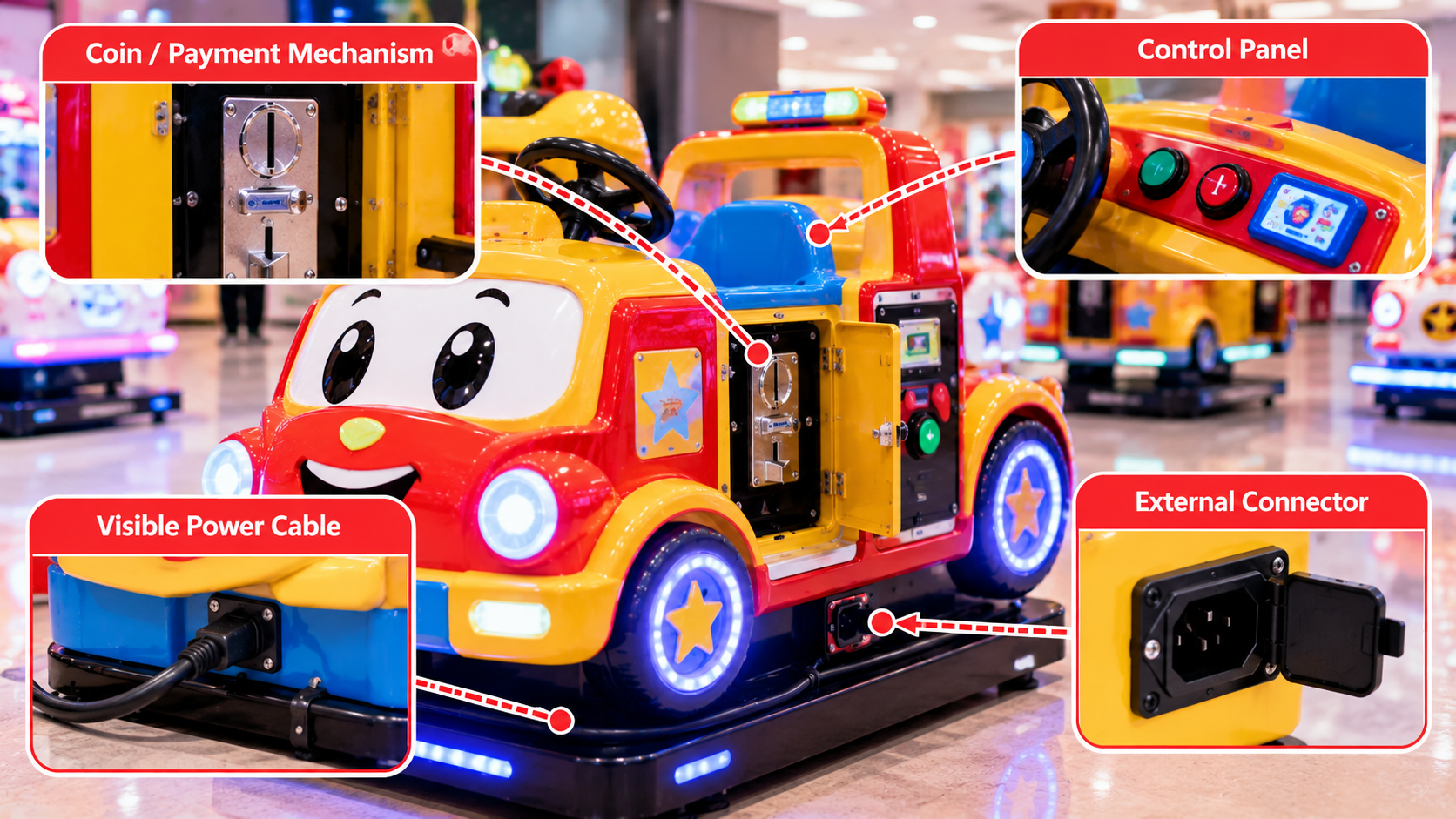
Check visible cables and external connections for obvious damage or abnormal condition.
Internal electrical inspection should only be performed according to the equipment documentation and by appropriate personnel.
Control Functions
Where applicable, confirm that the normal start, stop and control functions respond as expected.
If the equipment includes an emergency stop or other operating control, check it according to the product instructions.
2. Include the Payment System in the Operating Check
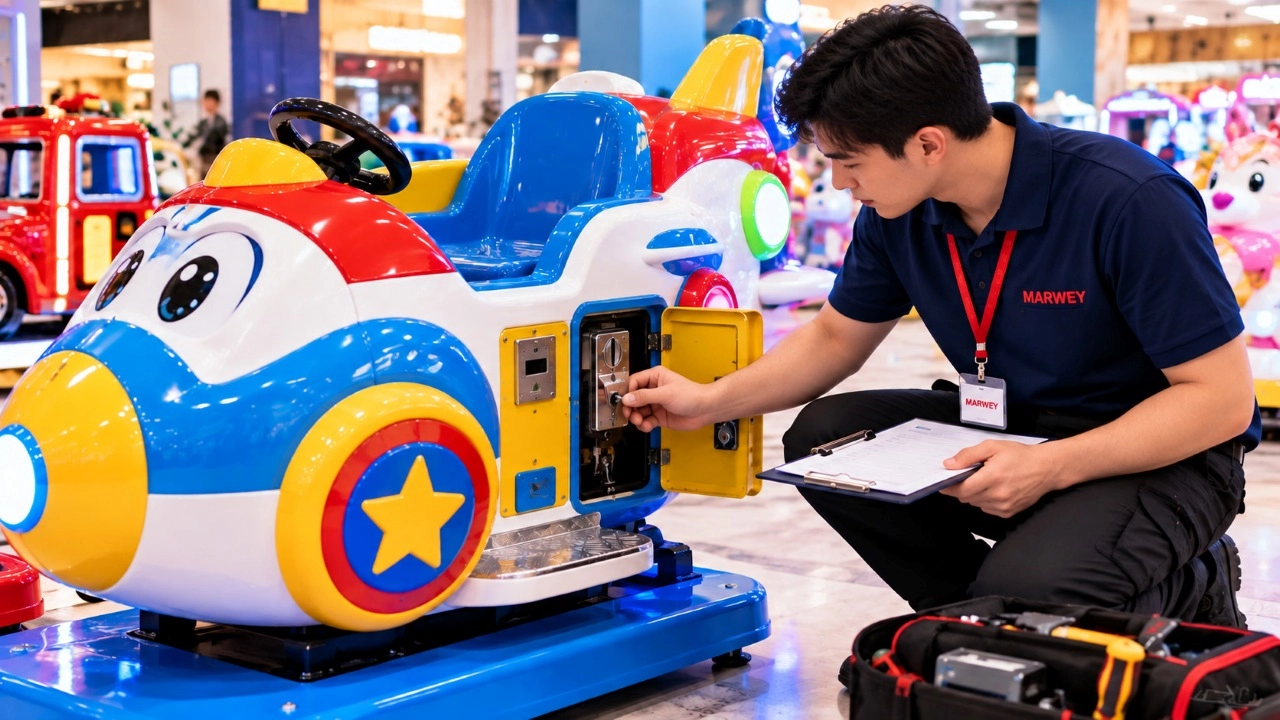
For coin-operated equipment, the payment mechanism is part of daily commercial operation.
For coin-operated models, include the payment mechanism in every operating check.
Operators can review whether:
- The payment input works normally
- Coins or tokens are accepted as configured
- The game starts correctly after payment
- The payment area is clean and unobstructed
- There are no obvious signs of damage
If the machine uses another payment configuration, follow the applicable operating procedure for that system.
3. Observe the Ride During Operation
Some issues are easier to identify while the equipment is running.
Staff should pay attention to anything that appears different from normal operation.
Unusual Noise
Listen for abnormal sounds that were not present during normal operation.
A change in sound can be a useful signal that the equipment should be checked.
Unusual Movement
Observe whether the ride moves in the expected way.
Unexpected shaking, irregular movement or another noticeable change should be documented and reviewed.
Temperature or Smell
If staff notice unusual heat, smell or another abnormal operating condition, the equipment should be checked according to the maintenance procedure.
Payment Problems
Repeated coin, token or payment failures should be recorded rather than treated as isolated customer complaints.
Customer Feedback
Customers may sometimes notice unusual sound, movement or control behavior before staff do.
Operational feedback should therefore be included in the maintenance record when relevant.
4. Clean the Ride After Operation
Cleaning is part of commercial equipment management, especially in family entertainment environments.
Focus on surfaces that customers frequently touch.
These may include:
- Seats
- Handles
- Steering wheels
- Buttons
- Screens
- Decorative surfaces
- Payment area
- Nearby floor area
Use cleaning methods appropriate for the actual equipment materials and follow the supplier's instructions where applicable.
Avoid allowing liquid or cleaning products to enter electrical or payment components.
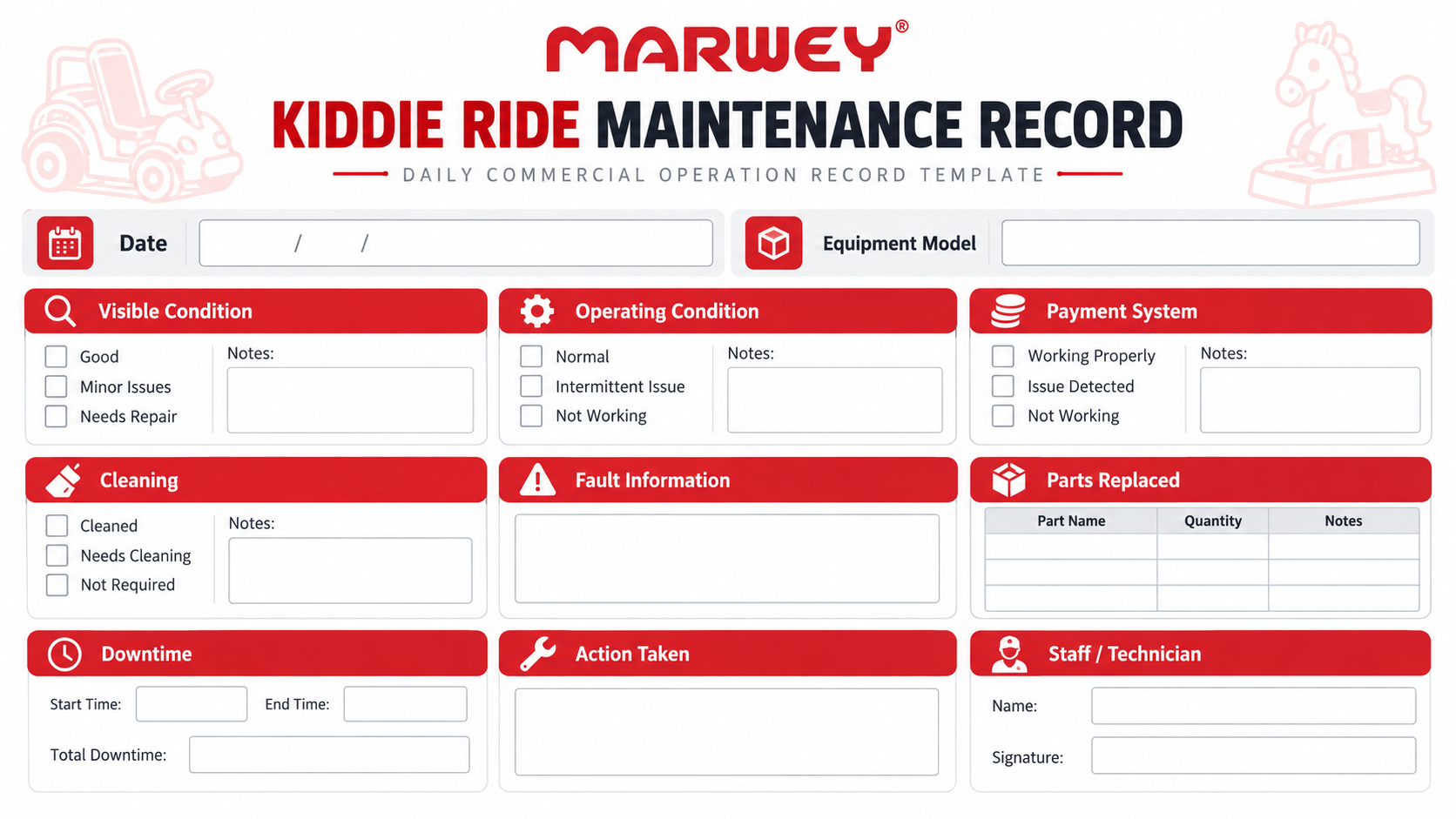
5. Keep Daily, Weekly and Monthly Maintenance Records
Maintenance records help operators understand whether a problem is isolated or recurring.
The specific inspection schedule should follow the equipment manual and local requirements.
A useful maintenance record can include:
| Maintenance Record | What to Record |
|---|---|
| Date | Inspection or maintenance date |
| Equipment Model | Ride or machine identification |
| Visible Condition | Exterior or structural observations |
| Operating Condition | Noise, movement or control observations |
| Payment System | Coin, token or payment status where applicable |
| Cleaning | Cleaning completed and any unusual findings |
| Fault Information | Error code or problem description if available |
| Parts Replaced | Replacement part and reason |
| Downtime | Time equipment was unavailable |
| Action Taken | Adjustment, repair or support request |
| Staff / Technician | Person completing the record |
This record can also help when communicating with a supplier or technical support team.
6. Track Repeated Problems Instead of Resetting and Forgetting
A problem that disappears temporarily may still be useful maintenance information.
If the same issue appears repeatedly, record:
- When it occurs
- How often it occurs
- What the machine was doing at the time
- Any displayed fault information
- Photos or video where useful
- What action was taken
This makes technical communication clearer than reporting only that “the machine does not work.”
7. Prepare Spare Parts Before They Are Needed
Commercial venues should discuss spare-parts planning during the purchasing stage.
The useful spare-parts list depends on the actual machine and its components, so operators should request model-specific information from the supplier.
Before ordering equipment, ask for:
- Recommended spare-parts list
- Consumable or wear-part information where applicable
- Part identification method
- Replacement instructions where provided
- Technical support procedure
Keeping the correct parts information can reduce confusion when maintenance is required.
8. Request Maintenance Documents During Purchasing
Maintenance planning should begin before the equipment arrives.
Review the product catalog and record the manual and spare-parts requirements for each model.
Useful documents to request may include:
- Operating manual
- Maintenance instructions
- Spare-parts list
- Product specifications
- Troubleshooting information where available
- Warranty terms
- Technical support contact process
The documents should correspond to the actual equipment model being purchased.
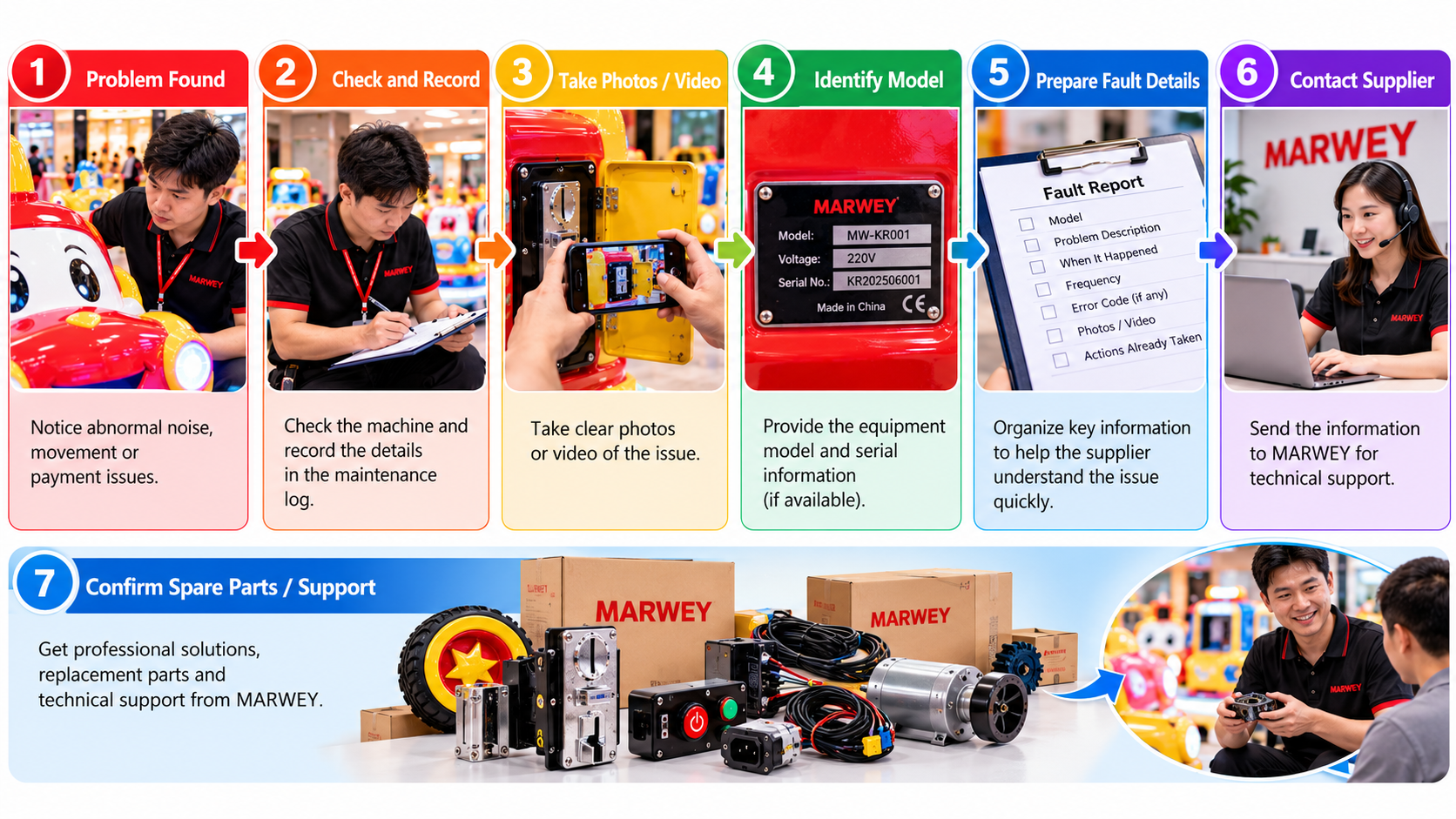
9. Build a Clear Fault Reporting Process
When technical support is required, clear information can make communication more efficient.
A useful fault report may include:
- Equipment model
- Identification or serial information where applicable
- Description of the problem
- When the issue started
- Whether the issue is repeated or occasional
- Photos
- Video
- Error code where available
- Actions already taken
Operators should avoid disassembling or modifying components outside the maintenance procedures provided for the equipment.
Ask MARWEY about technical support and replacement-part planning for your project.
10. Use a Simple Daily Inspection Checklist
A daily operating checklist can help staff complete inspections consistently.
| Daily Check Item | Status |
|---|---|
| Exterior condition checked | □ |
| Seat / passenger area checked | □ |
| Handles / controls checked | □ |
| Visible fasteners checked | □ |
| Visible cables checked | □ |
| Start / stop function checked | □ |
| Payment system checked where applicable | □ |
| Unusual noise checked | □ |
| Unusual movement checked | □ |
| High-contact areas cleaned | □ |
| Surrounding floor checked | □ |
| Abnormal condition recorded | □ |
This checklist is a general operational reference only. The equipment manual and applicable requirements should determine the actual inspection procedure for each machine.
FAQ
How often should a kiddie ride be inspected?
There is no single inspection schedule that applies to every machine.
Daily, weekly or monthly checks should be organized according to the equipment manual, supplier instructions, operating conditions and applicable local requirements.
What spare parts should a venue keep?
The spare-parts list depends on the equipment model.
Ask the supplier for model-specific recommendations and identify the parts that are most relevant to routine maintenance and expected wear.
Should the payment mechanism be checked every day?
For coin-operated equipment, the payment system is part of normal commercial operation and should be included in the venue's regular operating check according to the machine instructions.
What should staff do if a ride makes an unusual noise?
Record the abnormal condition and follow the equipment's maintenance or technical support procedure.
Do not continue normal operation if the condition suggests the equipment should be inspected before further use.
What information should I send to the supplier when reporting a problem?
Provide the equipment model, a clear description of the issue, photos or video where useful, any available fault information and details of what happened before the problem appeared.
Maintenance Is Part of Daily Operation
Commercial kiddie ride maintenance is not only about repairing equipment after a failure.
A practical maintenance system combines pre-opening checks, operating observations, cleaning, maintenance records, spare-parts planning and clear technical communication.
The exact procedures should always be based on the selected model, equipment documentation and applicable venue requirements.
What Safety and Quality Documents Should You Request for Commercial Kiddie Rides?
Kiddie Ride Maintenance Checklist for Daily Commercial Operation
How to Plan a Kiddie Ride Area for a Supermarket, Hotel or Family Restaurant
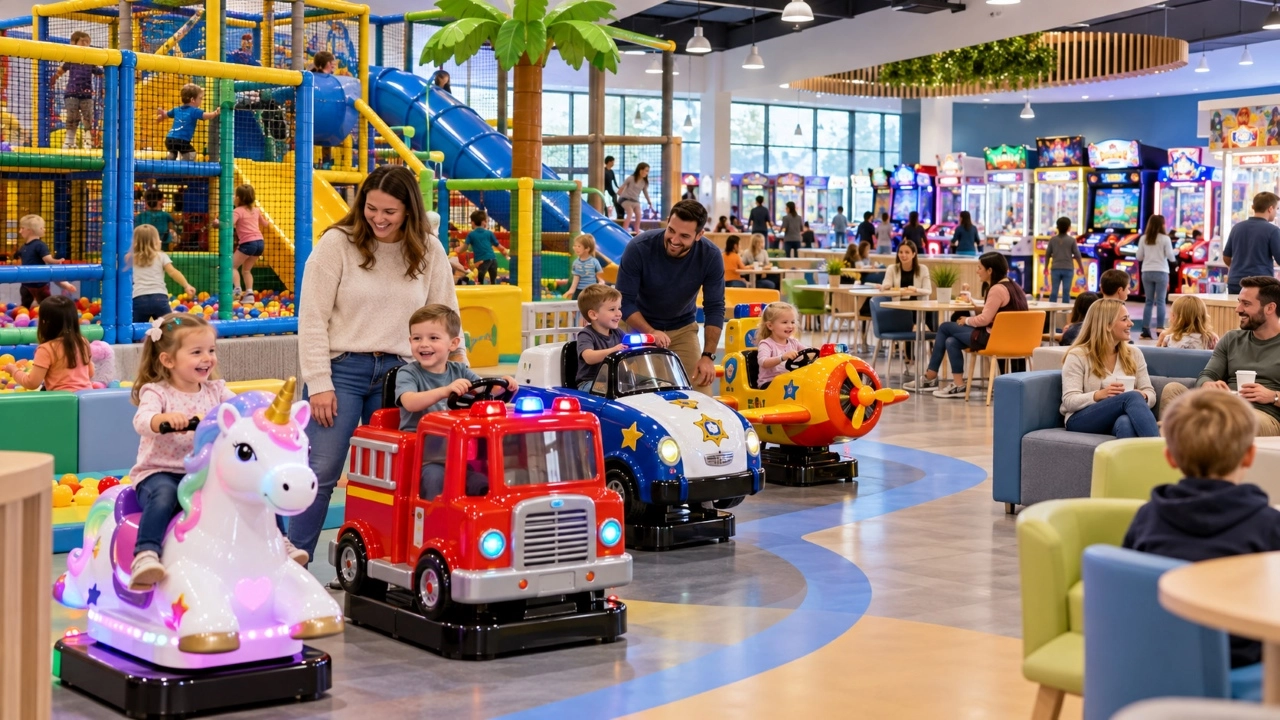
Best Kiddie Rides for Indoor Playgrounds and Family Entertainment Centers
FAQ
What is the minimum order quantity (MOQ)?
We offer flexible MOQ. For standard kiddie rides, 1 unit is acceptable. For OEM or customized orders, MOQ may vary depending on the design.
How long is the production and delivery time?
Production usually takes 7–15 days for standard models and 15–30 days for customized kiddie rides. Shipping time depends on your location.
Do you support OEM & ODM for custom kiddie rides? 🔥
Yes, we are a professional OEM & ODM kiddie rides manufacturer. We support custom design, branding, colors, and themes to help you stand out in your market.
Do you provide installation and after-sales support?
Yes, we provide installation guides, videos, and online technical support. We also offer a 12-month warranty and spare parts supply.
How do you ensure the quality of kiddie rides?
We implement strict quality control during production and testing. Each kiddie ride is tested before delivery to ensure safety, durability, and stable performance.
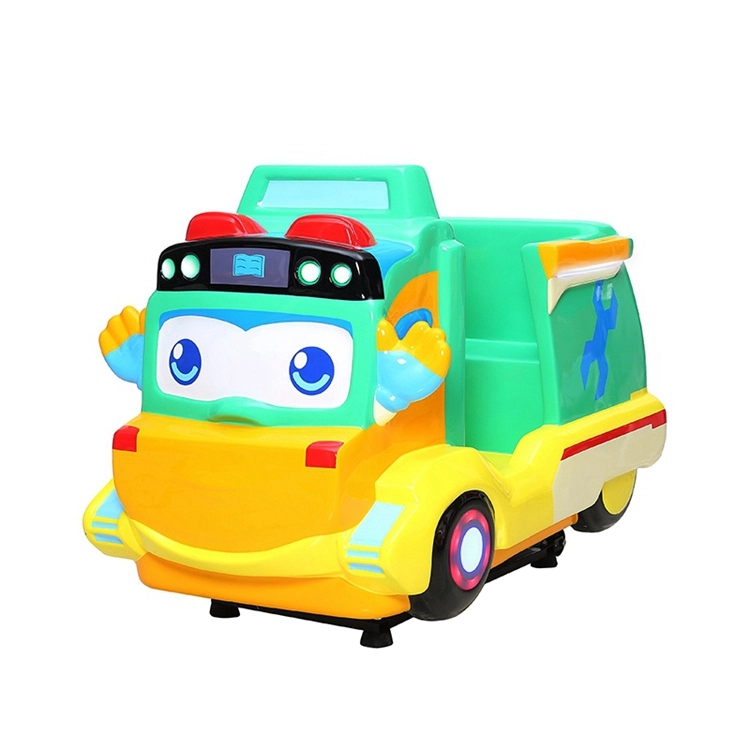
Kids Electric Swing Ride Commercial Amusement Game Machine
These durable electric swing rides are ideal for amusement parks and family entertainment centers. Safe, simple to operate and long-lasting, they are great commercial amusement equipment for sale.
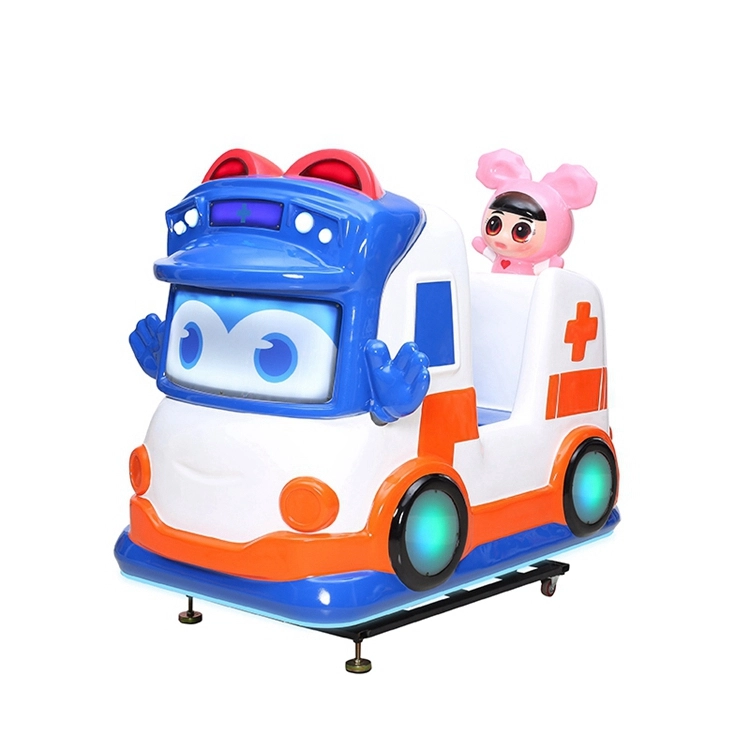
Indoor Supermarket Coin Operated Kids Amusement Ride Machine
These durable coin-operated indoor amusement machines fit supermarkets and family venues perfectly. They integrate video content and fun movements to delight kids and effectively draw more visitors.
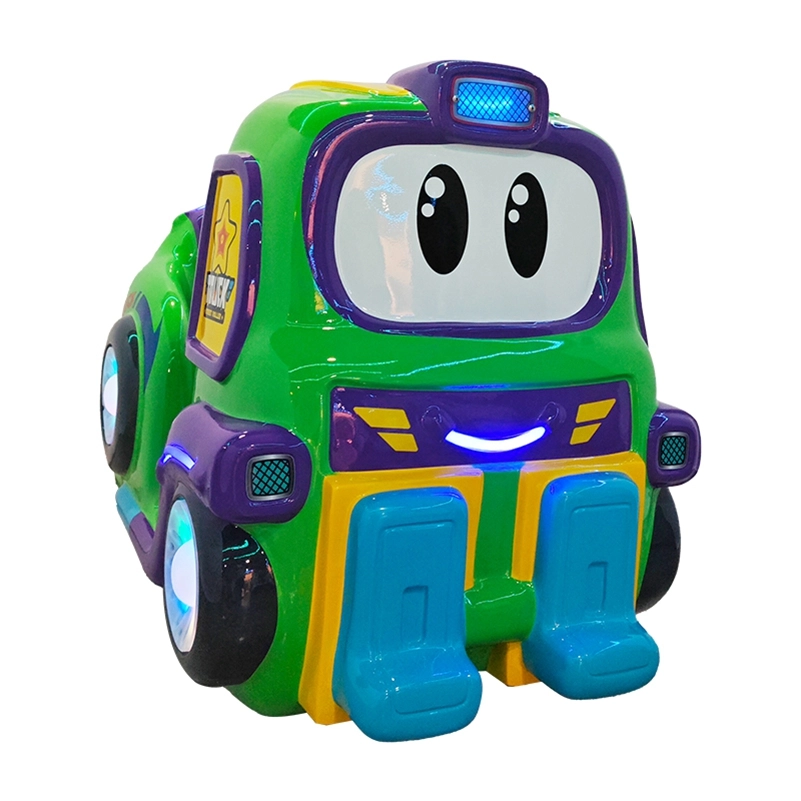
Children Coin Operated Swing Car Engineering Team MP5 Arcade Equipment
This coin-operated electric MP5 swing car is suitable for amusement parks and kids' play areas. Well-crafted and easy to use, it provides safe and enjoyable rides for young children.
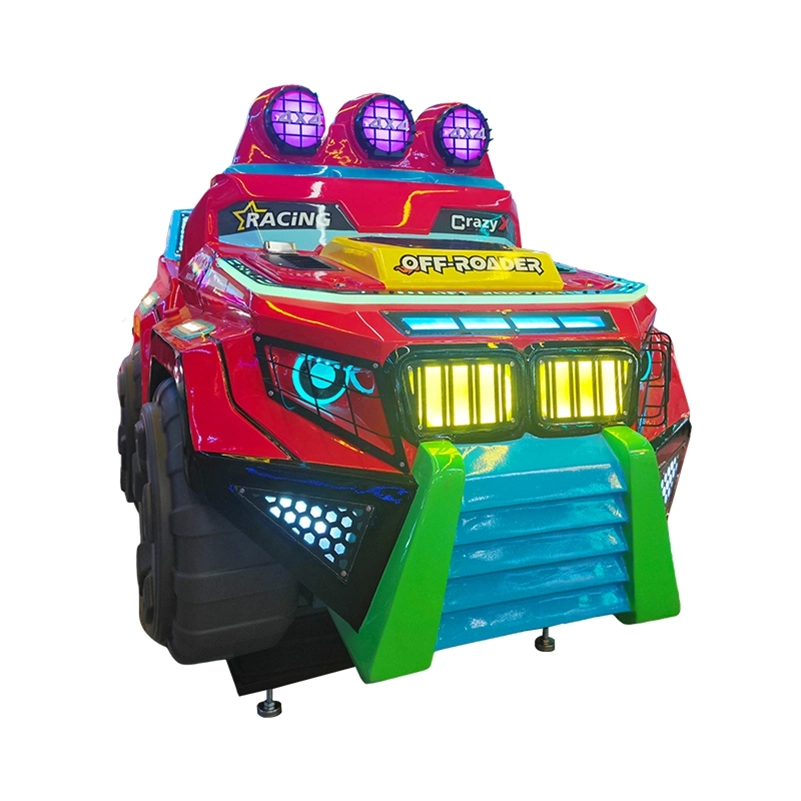
New Design Coin Operated Swing Machine Indoor Commercial Kiddie Ride
This newly designed coin-operated kiddie swing machine is built for indoor commercial use. It is easy to install and runs reliably, providing safe and entertaining fun for children in arcades and amusement parks.
Leave a message
Contact us

info@marwey.com

+86 189 2218 4260

101, Bldg. A, No. 501, Shixin Road, Dalong Street, Guangzhou, Guangdong, China
Quick Links
Kiddie Ride
Marwey Amusement
marwey_arcade
Marwey
Arcade Marwey
Whatsapp: +8618922184260