OEM and ODM Kiddie Rides: What Can Be Customized?
OEM and ODM kiddie ride projects can involve appearance, branding, dimensions, functional configuration and complete venue concepts. Buyers should confirm each customization item in writing and review drawings, samples and production details before approving the final order.
- 1. Separate Standard Models From Customized Projects
- 2. Customize the Appearance and Theme
- Color
- Logo
- Theme
- 3. Confirm Functional Configuration by Model
- 4. Review Structural and Space Requirements
- 5. Use a Clear Design Approval Process
- Project Requirement
- Design Review
- Sample or Visual Validation
- Production Approval
- 6. Create a Customization Confirmation Checklist
- 7. Watch for Common Customization Risks
- Copyright and Brand Assets
- Design Revisions
- MOQ
- Lead Time
- Spare Parts
- After-Sales Support
- 8. Match Customization to the Commercial Goal
- 9. Prepare the Right Information Before Requesting Customization
- FAQ
- Can I add my brand logo to a kiddie ride?
- Can I change the color of a kiddie ride?
- Can the dimensions of a kiddie ride be customized?
- Can I customize the payment system?
- How long does customization take?
- Do I need to approve a design before production?
- Confirm the Design Before Production
Custom kiddie ride projects involve more than changing a color or adding a logo.
For distributors, branded entertainment projects, shopping mall chains and themed venues, customization may include appearance, branding, dimensions, selected functions and the way the equipment fits into the overall venue concept.
The most important purchasing rule is simple: every customized detail should be confirmed in writing before production. A rendering can help explain the concept, but it should not replace final product specifications and approval records.
MARWEY provides OEM and ODM support for commercial kiddie ride projects.
1. Separate Standard Models From Customized Projects
Before discussing customization, buyers should first determine whether the project requires:
- A standard product
- A standard product with appearance changes
- A branded OEM project
- A more extensive ODM-style project
- A group of customized rides for one venue concept
The wider the customization scope, the more information should be confirmed before production.
For a simple project, changes may focus mainly on colors, graphics or logos.
For a more complex project, the buyer may also need to discuss dimensions, functions, equipment combinations and how different products fit into the venue.
Review the coin operated, tea cup, train and carousel ride categories before choosing a customization route.
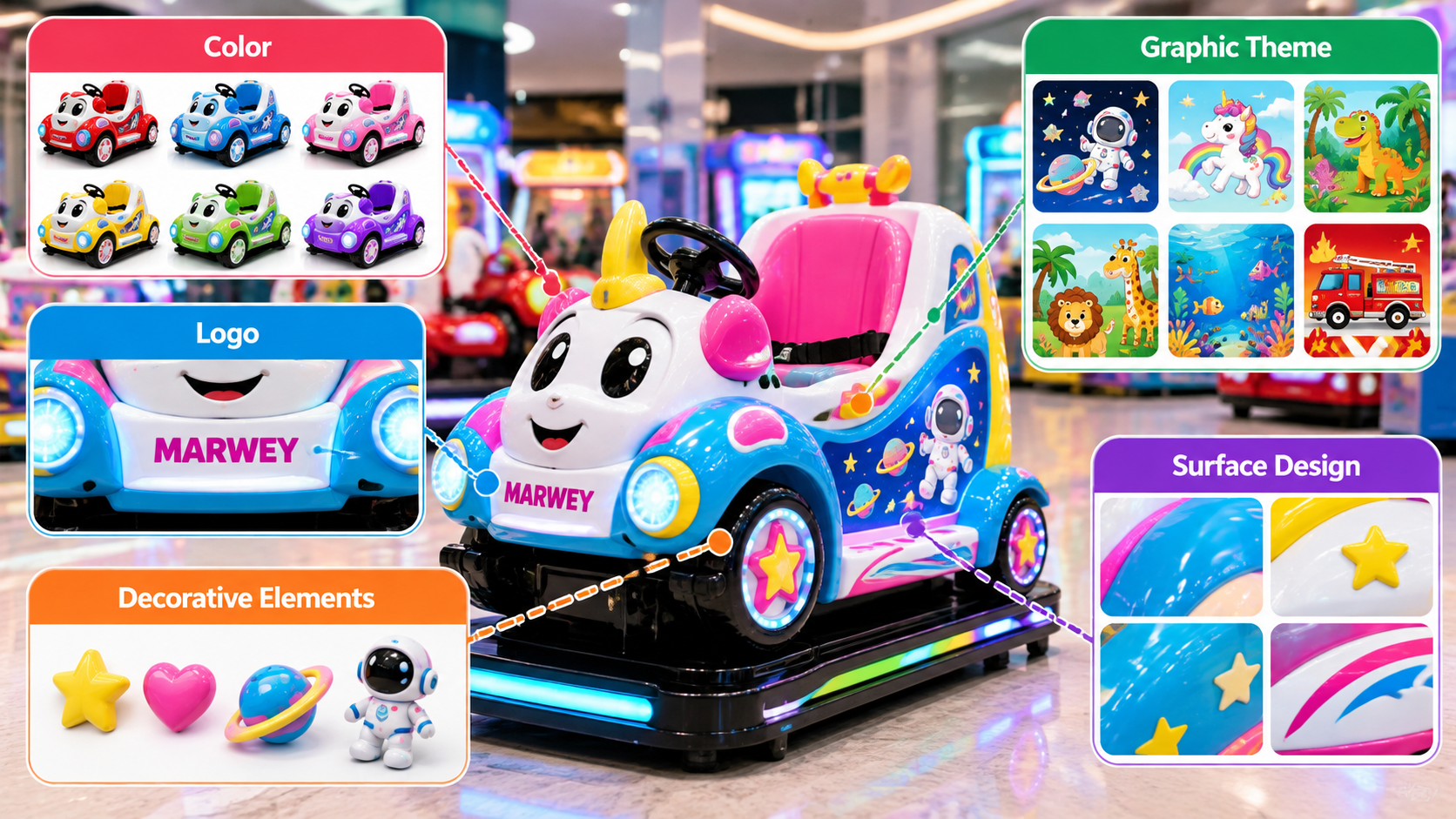
2. Customize the Appearance and Theme
Appearance customization is often the first area buyers discuss.
Depending on the selected model and project requirements, the customization discussion may include:
- Main color scheme
- Graphic theme
- Logo placement
- Decorative elements
- Surface graphics
- Character-style elements supplied or approved for the project
- Overall visual direction
The exact customization options should be confirmed for the selected product model.
Color
General descriptions such as “red,” “blue” or “pink” may not be precise enough for a commercial project.
When color is important, the buyer and supplier should confirm the final visual reference before production.
Logo
A brand logo may be considered as part of the exterior design.
Before approval, confirm:
- Logo artwork
- Position
- Size
- Color
- Application method
- Final visual effect
Theme
For themed commercial venues, equipment graphics can be planned to match the surrounding environment.
Explore tea cup rides and carousel rides as starting points for themed designs.
If copyrighted characters, artwork or branded material are involved, the buyer should confirm the right to use those materials before production.
3. Confirm Functional Configuration by Model
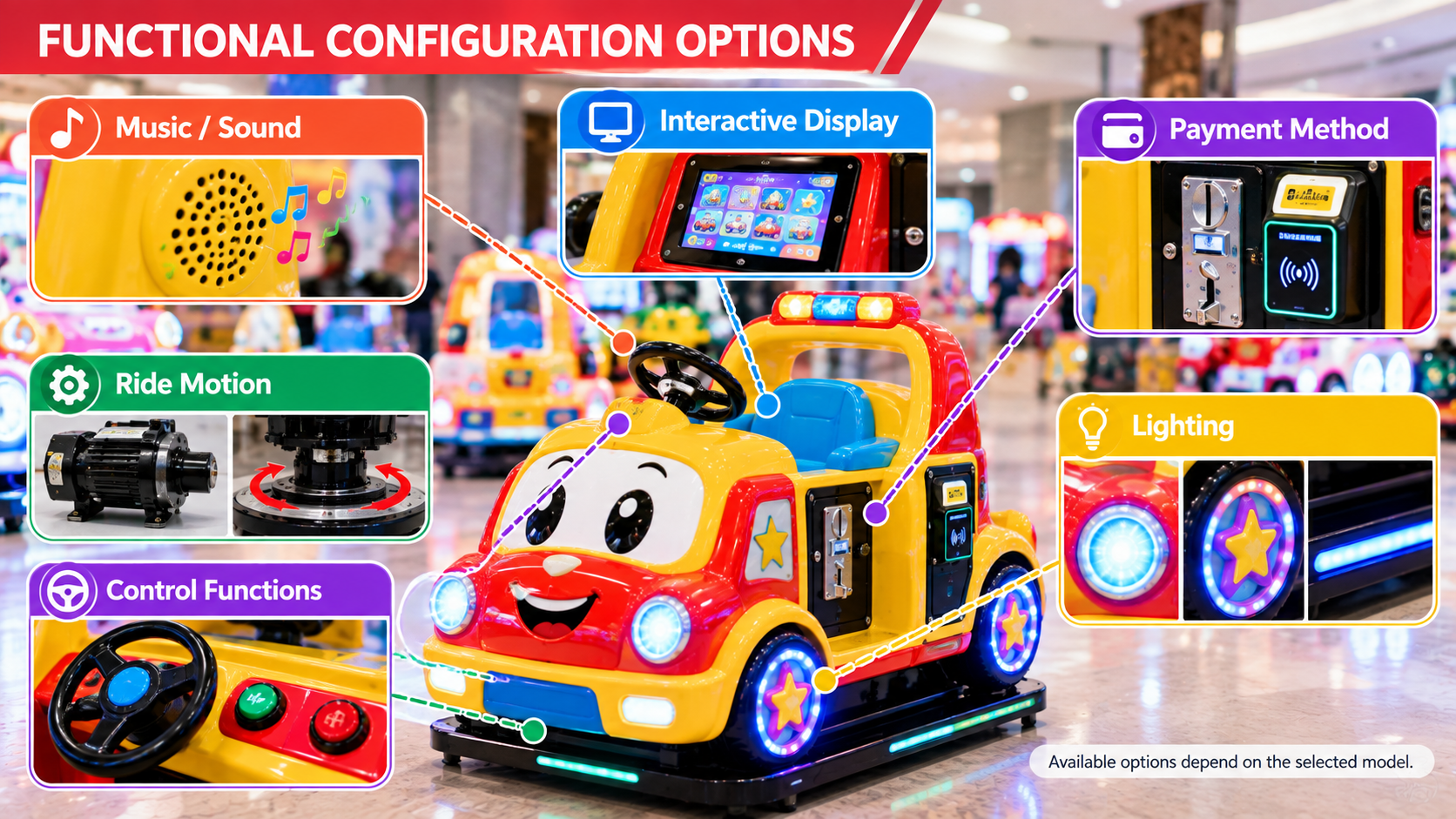
Some projects may also require changes to the equipment configuration.
However, functional options should never be assumed to apply to every kiddie ride.
Depending on the actual model, buyers may ask about items such as:
- Music or sound configuration
- Interactive display
- Payment method
- Ride motion
- Lighting
- Control functions
Each requested change should be reviewed against the selected product before it is added to the quotation.
The final order should state clearly which configuration is included.
4. Review Structural and Space Requirements
Customization can also affect how a ride fits into the venue.
Before approving structural or dimensional changes, the buyer should review:
- Overall product dimensions
- Number of seats where applicable
- Entry and exit arrangement
- Operating space
- Maintenance access
- Packing dimensions
- Delivery access
A design change that looks attractive in a rendering may affect installation, packing or customer circulation.
For this reason, appearance and space planning should be reviewed together rather than separately.
5. Use a Clear Design Approval Process
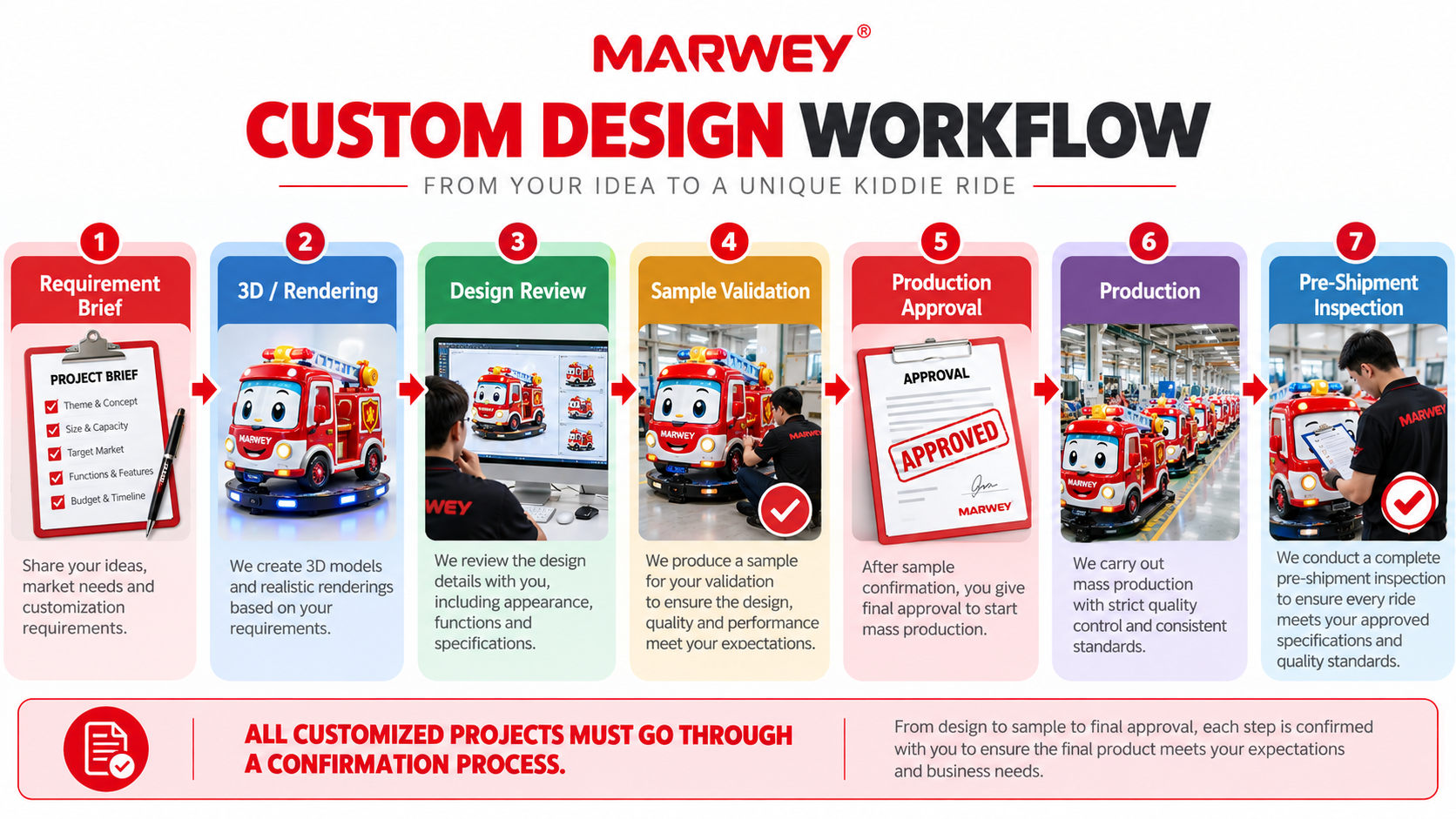
Customized projects should follow a documented approval process.
A practical workflow can be:
Project Requirement
→ Design / 3D Rendering
→ Design Review
→ Sample or Visual Validation Where Applicable
→ Production Approval
→ Production
→ Pre-Shipment Inspection
The exact workflow may vary by project.
The important point is that the buyer should know when design decisions become final.
Project Requirement
The buyer should provide enough information to define the customization direction.
Useful information may include:
- Target market
- Venue type
- Available floor area
- Preferred ride type
- Brand assets
- Color direction
- Theme requirements
- Quantity
- Functional requirements
Design Review
Review the design carefully before approving production.
Check whether the design matches the agreed:
- Product model
- Color
- Logo
- Theme
- Key dimensions
- Functional configuration
Sample or Visual Validation
Where a sample, rendering or other validation step is available, use it to confirm the agreed design.
A visual sample should still be matched with the written specification.
Production Approval
Production should begin only after the agreed customization details have been confirmed.
6. Create a Customization Confirmation Checklist
A written checklist can help reduce misunderstandings.
| Customization Item | What to Confirm |
|---|---|
| Product Model | Exact base model |
| Theme | Final visual direction |
| Color | Approved color reference |
| Logo | Artwork, position, size and color |
| Graphics | Final approved artwork |
| Dimensions | Any confirmed dimensional changes |
| Seats | Confirmed configuration where applicable |
| Payment | Confirmed payment option for the model |
| Music / Display | Only if applicable to the selected model |
| Motion | Confirmed operating configuration |
| Packing | Final packing information |
| Approval Record | Final drawing, rendering or written confirmation |
This checklist should be adjusted to the specific project and product.
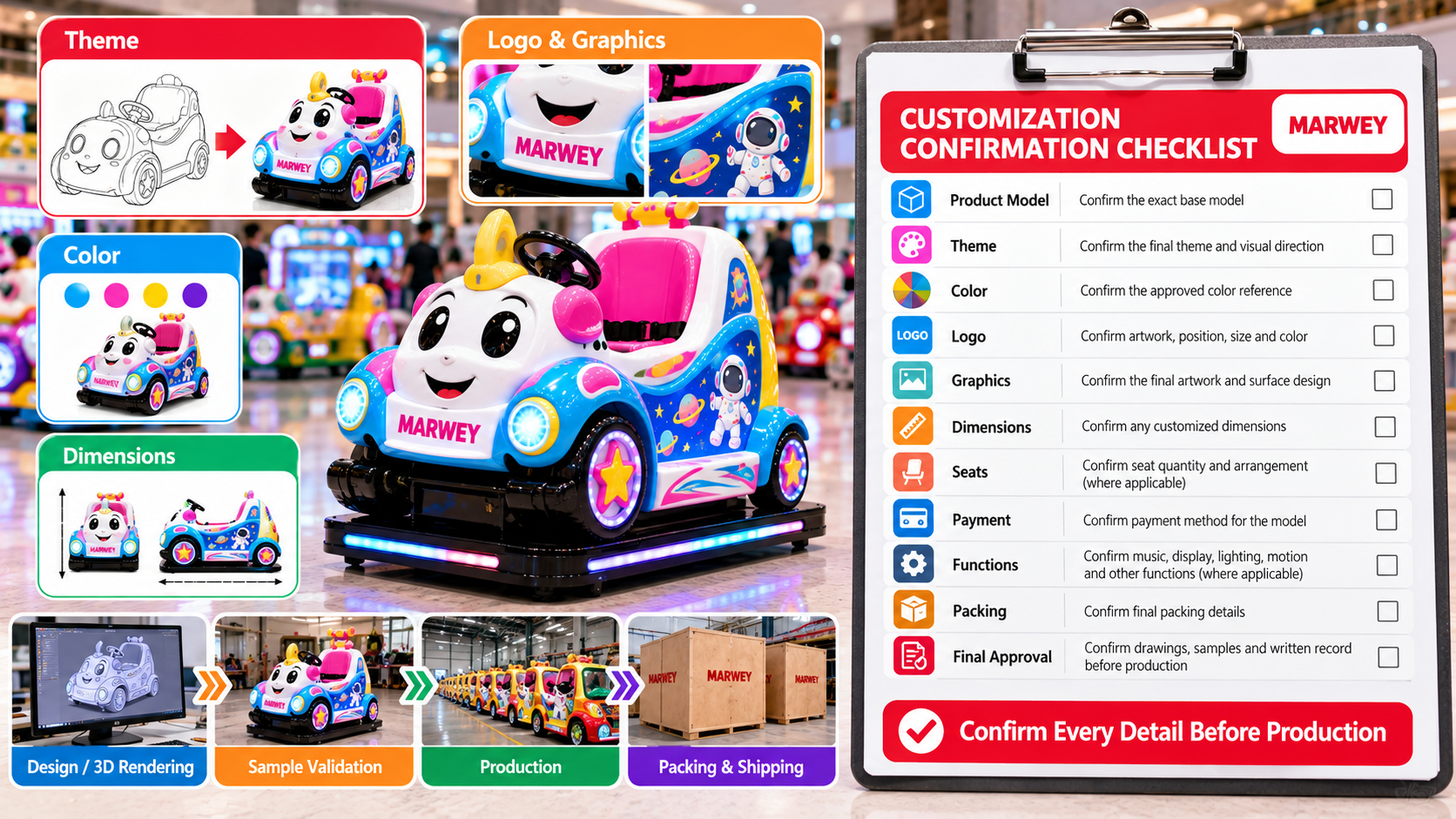
7. Watch for Common Customization Risks
Customization creates more decisions than a standard product order.
Buyers should review several potential risk areas before production.
Copyright and Brand Assets
The buyer should confirm that logos, characters, artwork and other supplied materials can legally be used for the project.
Design Revisions
If several design changes are expected, clarify the review and approval process before production.
Do not assume unlimited changes after production approval.
MOQ
Minimum order requirements can vary by product and customization scope.
Do not assume a fixed MOQ. Confirm the requirement for the specific project with the supplier.
Lead Time
Customization may affect the project schedule, but the actual timing depends on the selected product, order quantity, design requirements and production conditions.
Avoid relying on a fixed number of days until the supplier confirms the specific project.
Spare Parts
If customization changes components or appearance, ask how replacement parts will be identified later.
After-Sales Support
Keep the approved drawings, specifications and model information so that future technical communication refers to the correct customized version.
8. Match Customization to the Commercial Goal
Customization should solve a business need rather than simply add more design elements.
For example:
A distributor may need branded equipment for a local market.
A shopping mall chain may want a consistent color and logo system across multiple locations.
A theme park may need equipment that matches a specific visual concept.
A project designer may need ride dimensions and appearance to coordinate with the surrounding space.
In each case, the customization scope should support the actual venue and purchasing objective.
9. Prepare the Right Information Before Requesting Customization
Before contacting the supplier, prepare as much project information as possible.
A useful request can include:
- Company or project name
- Destination market
- Venue type
- Floor area
- Preferred ride category
- Quantity
- Logo file
- Color reference
- Theme reference
- Requested functions
- Target project schedule
This makes it easier to determine which changes are realistic for the selected equipment.
Send your logo, target market, floor area and preferred ride type for a customization discussion.
FAQ
Can I add my brand logo to a kiddie ride?
Logo customization may be available depending on the selected model and project.
Confirm the final artwork, size, position, color and application method before approving production.
Can I change the color of a kiddie ride?
Color customization may be discussed for suitable models.
Use an approved visual or color reference so both parties understand the final requirement.
Can the dimensions of a kiddie ride be customized?
Structural or dimensional changes depend on the specific product.
Any proposed change should be reviewed together with installation, operating space, packing and other project requirements.
Can I customize the payment system?
Payment options depend on the selected equipment and configuration.
The required payment method should be confirmed for the exact model before it is included in the quotation.
How long does customization take?
There is no universal customization period.
The schedule depends on the product, customization scope, quantity, design approval and production conditions. Confirm the project-specific timing with the supplier.
Do I need to approve a design before production?
For customized projects, the buyer should confirm the agreed design and relevant specifications before production approval.
This helps ensure that colors, logos, graphics and other requested changes match the final order.
Confirm the Design Before Production
OEM and ODM kiddie ride projects can help equipment better match a brand, venue or target market, but customization also creates more details that need to be controlled.
The safest purchasing process is to define the customization scope, review drawings and visual references, confirm specifications in writing and approve the final version before production.
Do not rely on a rendering alone. The final order should clearly identify what will actually be manufactured.
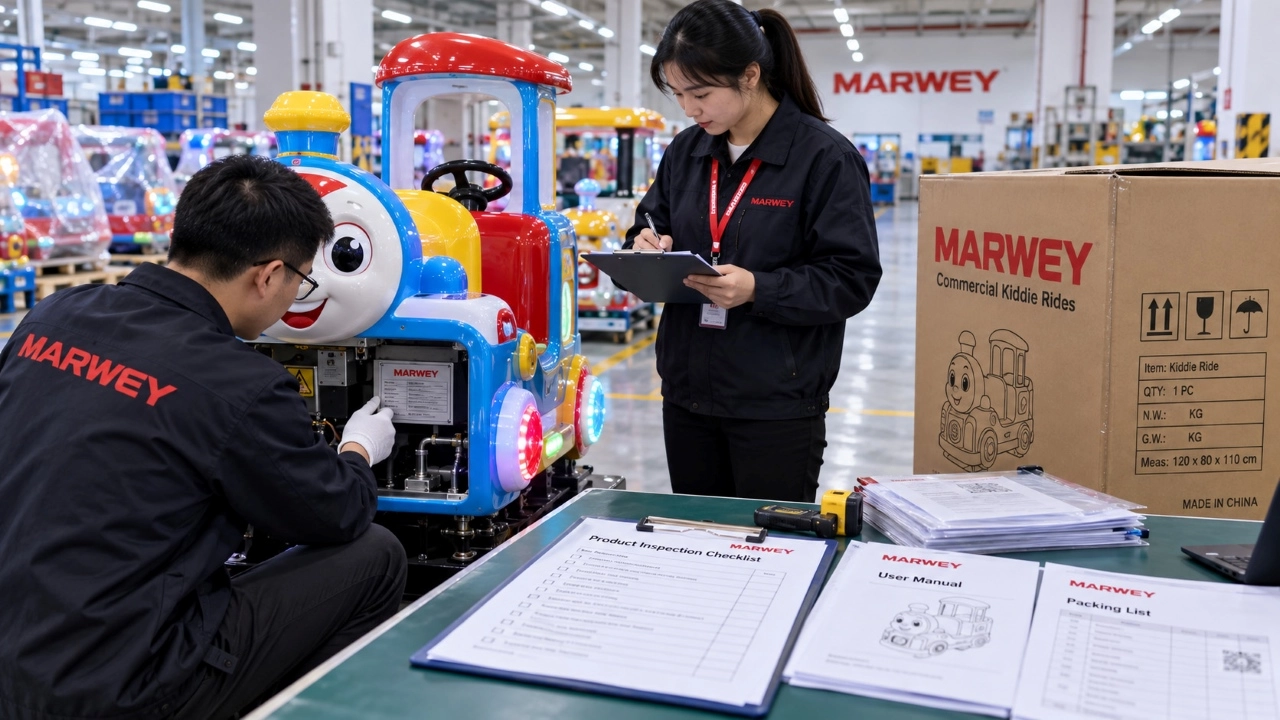
What Safety and Quality Documents Should You Request for Commercial Kiddie Rides?
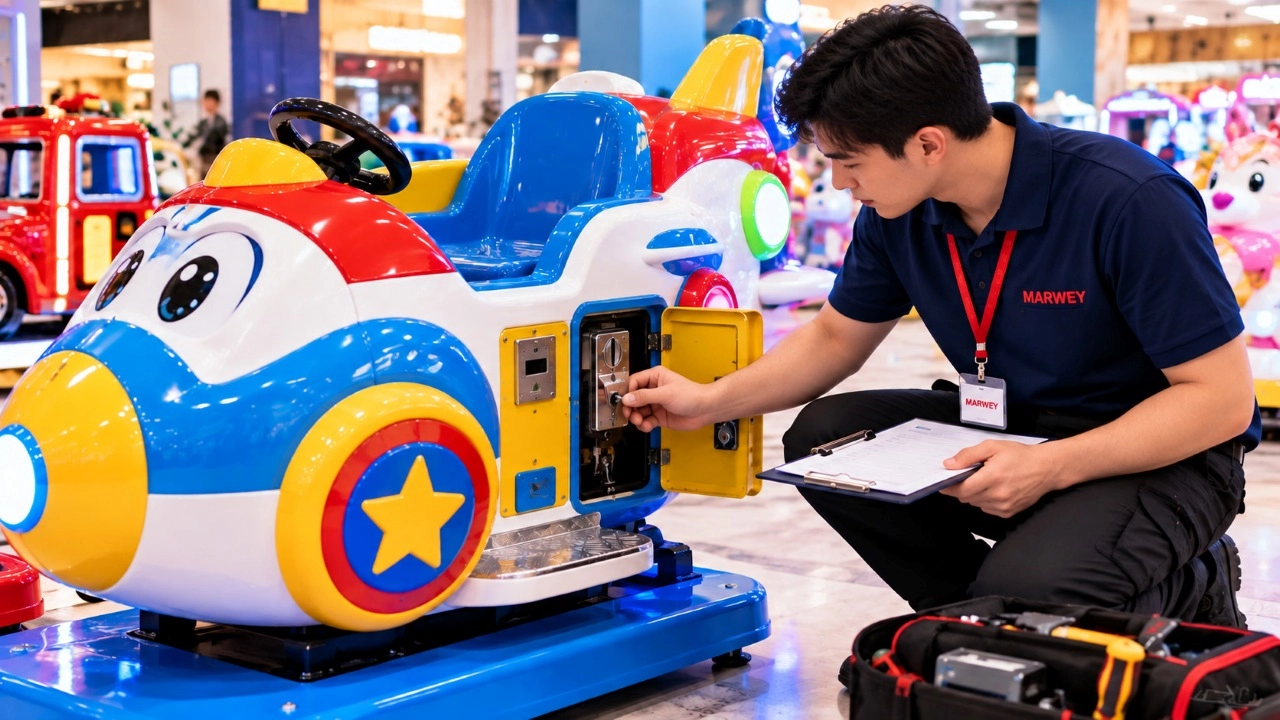
Kiddie Ride Maintenance Checklist for Daily Commercial Operation
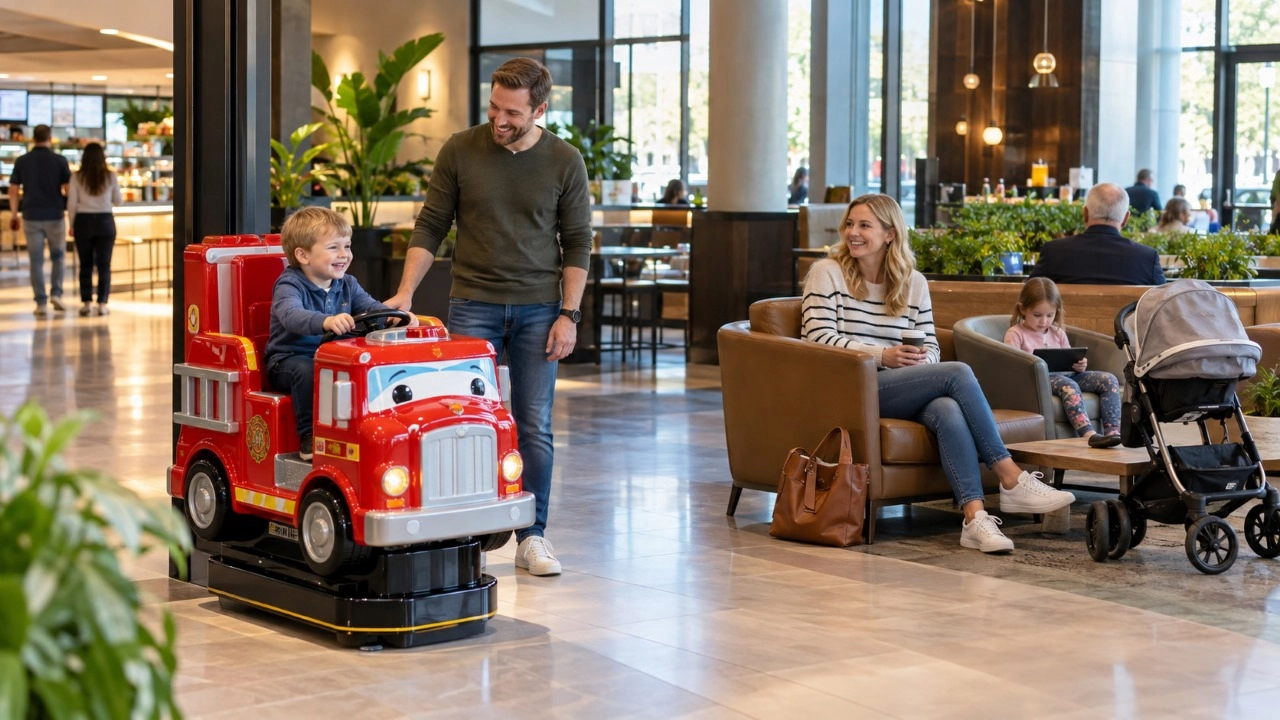
How to Plan a Kiddie Ride Area for a Supermarket, Hotel or Family Restaurant
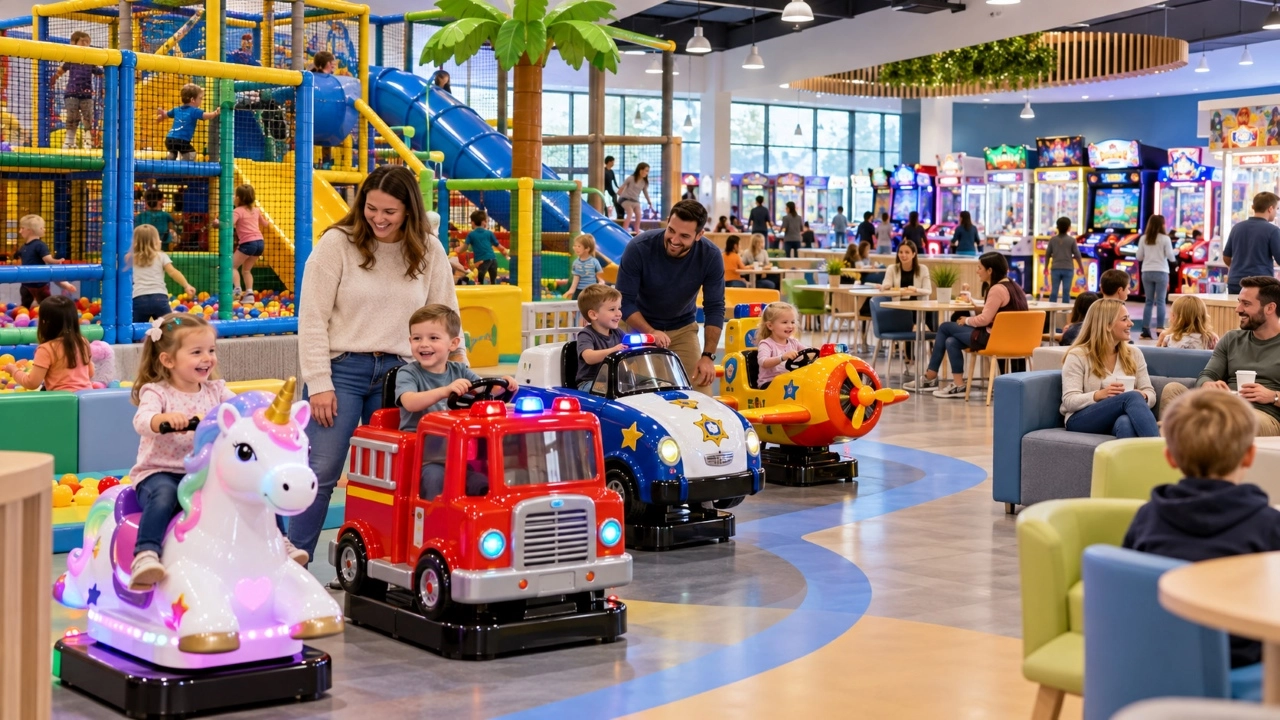
Best Kiddie Rides for Indoor Playgrounds and Family Entertainment Centers
FAQ
How do you ensure the quality of kiddie rides?
We implement strict quality control during production and testing. Each kiddie ride is tested before delivery to ensure safety, durability, and stable performance.
Do you provide installation and after-sales support?
Yes, we provide installation guides, videos, and online technical support. We also offer a 12-month warranty and spare parts supply.
What is the price of kiddie rides?
The price of kiddie rides depends on the model, size, and customization requirements. Our coin operated kiddie rides are competitively priced for global markets. Contact us to get the latest price list and quotation.
What is the minimum order quantity (MOQ)?
We offer flexible MOQ. For standard kiddie rides, 1 unit is acceptable. For OEM or customized orders, MOQ may vary depending on the design.
What certifications do your kiddie rides have?
All our kiddie rides are manufactured under strict quality control and comply with international standards such as CE certification.
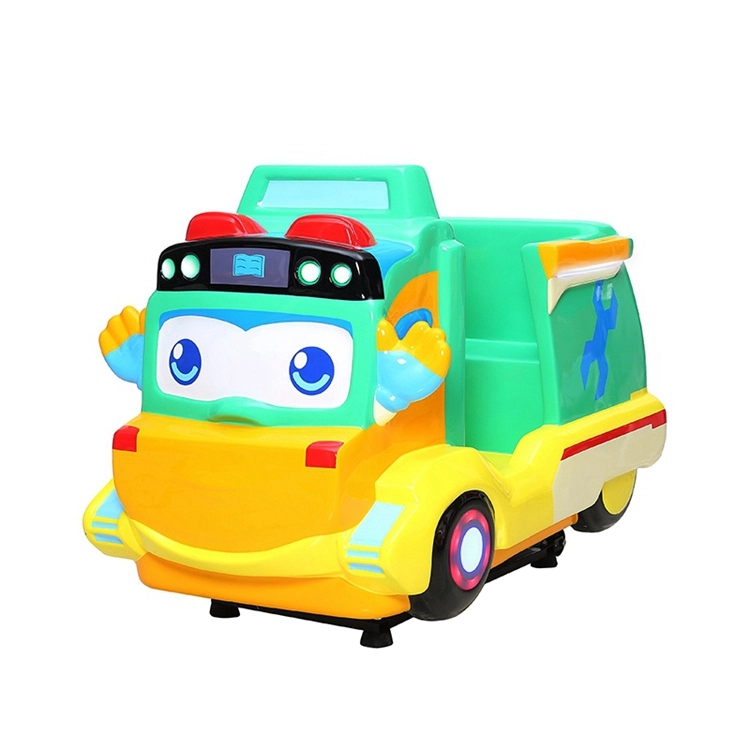
Kids Electric Swing Ride Commercial Amusement Game Machine
These durable electric swing rides are ideal for amusement parks and family entertainment centers. Safe, simple to operate and long-lasting, they are great commercial amusement equipment for sale.
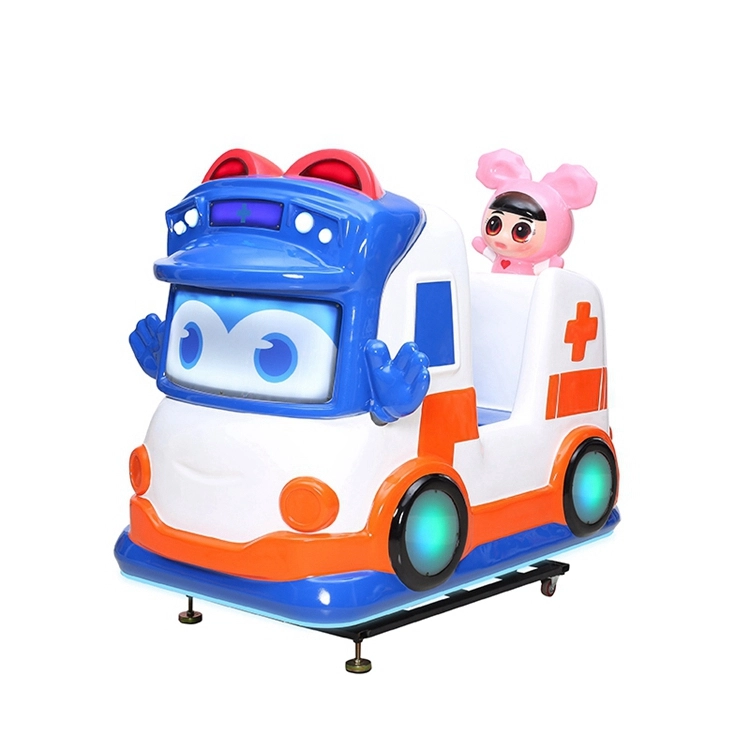
Indoor Supermarket Coin Operated Kids Amusement Ride Machine
These durable coin-operated indoor amusement machines fit supermarkets and family venues perfectly. They integrate video content and fun movements to delight kids and effectively draw more visitors.
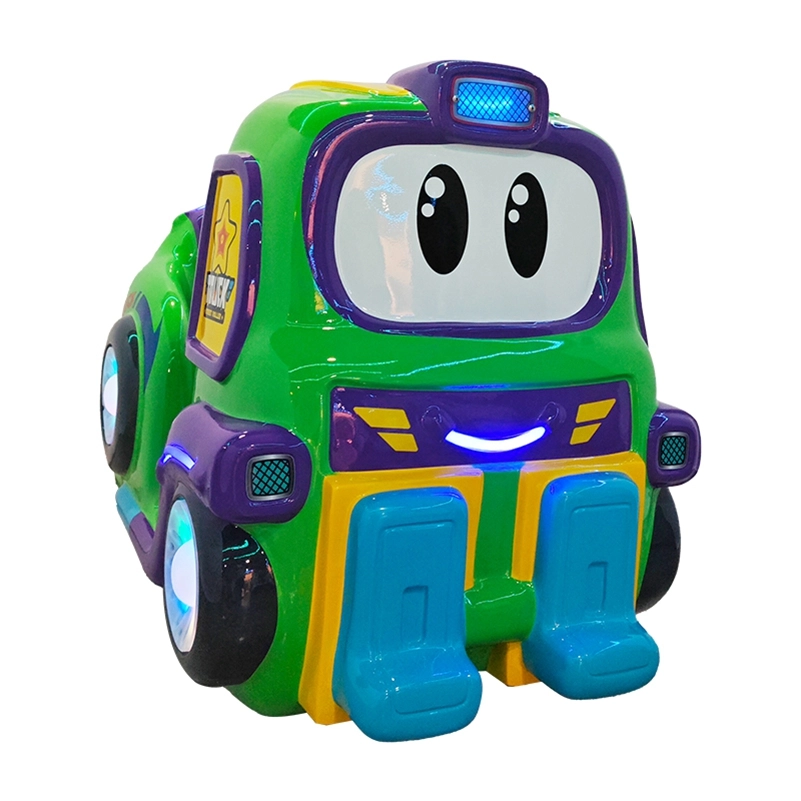
Children Coin Operated Swing Car Engineering Team MP5 Arcade Equipment
This coin-operated electric MP5 swing car is suitable for amusement parks and kids' play areas. Well-crafted and easy to use, it provides safe and enjoyable rides for young children.
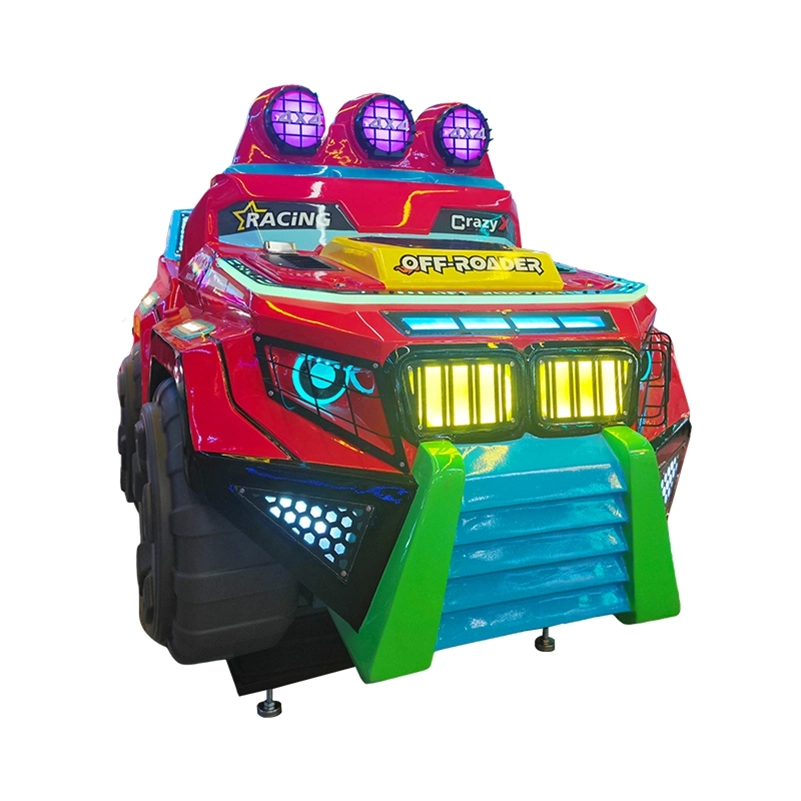
New Design Coin Operated Swing Machine Indoor Commercial Kiddie Ride
This newly designed coin-operated kiddie swing machine is built for indoor commercial use. It is easy to install and runs reliably, providing safe and entertaining fun for children in arcades and amusement parks.
Leave a message
Contact us

info@marwey.com

+86 189 2218 4260

101, Bldg. A, No. 501, Shixin Road, Dalong Street, Guangzhou, Guangdong, China
Quick Links
Kiddie Ride
Marwey Amusement
marwey_arcade
Marwey
Arcade Marwey
Whatsapp: +8618922184260